
Does Alexa Spy on You? What You Need to Know

Bisma Farrukh
Smart speakers, such as Amazon Alexa, have become increasingly common in homes worldwide, offering convenience through voice commands, smart home control, and instant access to information. However, their always-on microphones have raised serious privacy concerns. Many users ask questions such as “Does Alexa spy on you?” “Is Alexa a spying device?”, and “Does Alexa listen to your conversations?” Understanding how Alexa works is essential to separating myths from reality.
Table of Contents
What Is Amazon Alexa and How Does It Work?
Amazon Alexa is an AI-powered voice assistant that uses natural language processing and machine learning to understand and respond to user commands. Users interact with Alexa by speaking a wake word, typically “Alexa,” followed by a request or question. Alexa then processes the command and delivers a spoken response or performs the requested action.
Alexa can:
- Play music, podcasts, and audiobooks
- Control smart home devices like lights and locks.
- Provide weather, news, and traffic updates
- Set alarms, reminders, and timers
- Answer general knowledge questions.
Alexa works through a combination of hardware, software, and cloud-based AI services. The process happens in several steps:
1. Always-On Microphones
Alexa-enabled devices are equipped with multiple microphones that continuously listen for the wake word. These microphones are designed to detect the wake word even from across the room while ignoring most background noise.
2. Wake Word Detection
When the device hears the wake word (such as “Alexa,” “Echo,” or “Computer”), it activates and begins recording the user’s voice command. Until the wake word is detected, audio is processed locally on the device and is not sent to Amazon’s servers.
3. Voice Command Recording
After activation, Alexa records the spoken command and securely sends the audio data to Amazon’s cloud servers for processing.
4. Cloud-Based Processing
In the cloud, Alexa uses speech recognition to convert the audio into text. Natural language understanding then interprets the user’s intent, whether it’s asking a question, controlling a device, or launching a skill.
5. Skill Execution
Alexa determines the appropriate action by calling a built-in function or a third-party Alexa Skill. For example, a music request triggers a streaming service, while a smart home command communicates with the connected device.
6. Response Delivery
Alexa sends the response back to the device, which plays it through the speaker or performs the requested action, such as turning on lights or setting a reminder.
Does Alexa Spy on You?
Alexa is not designed to spy on users, but it does collect voice data to function effectively. The perception of spying comes from the fact that Alexa is always listening for its wake word. While Amazon states that recordings are only sent after the wake word is triggered, accidental activations can occur. These accidental recordings have raised concerns that Alexa may unintentionally capture private conversations.
Is Alexa a Spying Device?
Alexa is not officially classified as a spying device, but it can feel intrusive if privacy settings are not correctly managed. The device collects data such as:
- Voice recordings after wake word detection
- Interaction history
- Device usage patterns
This data is used to improve Alexa’s performance, personalize responses, and support advertising insights. However, improper configuration or lack of awareness can lead to privacy risks.
Does Alexa Listen to Your Conversations?
Alexa continuously listens only for the wake word, not full conversations. However, there are situations where Alexa may seem to listen in:
- Background noise or similar words trigger Alexa accidentally
- TV or radio audio activates the device
- Multiple Alexa devices overlap in listening range
Can Alexa Record Conversations Without You Knowing?
This is one of the most common privacy concerns associated with smart speakers, such as Amazon Alexa. While Alexa is not designed to record users secretly, there are situations where it may capture audio without you immediately realizing it. Understanding how and why this happens helps separate fact from fear.
Alexa devices are designed to start recording only after hearing a wake word such as “Alexa,” “Echo,” or “Computer.” Until the wake word is detected, audio is processed locally on the device and is not sent to Amazon’s servers.
Once activated:
- Alexa records the voice command
- Sends the audio to the cloud for processing
- Stores the recording in your Alexa account
Privacy Risks Associated With Alexa
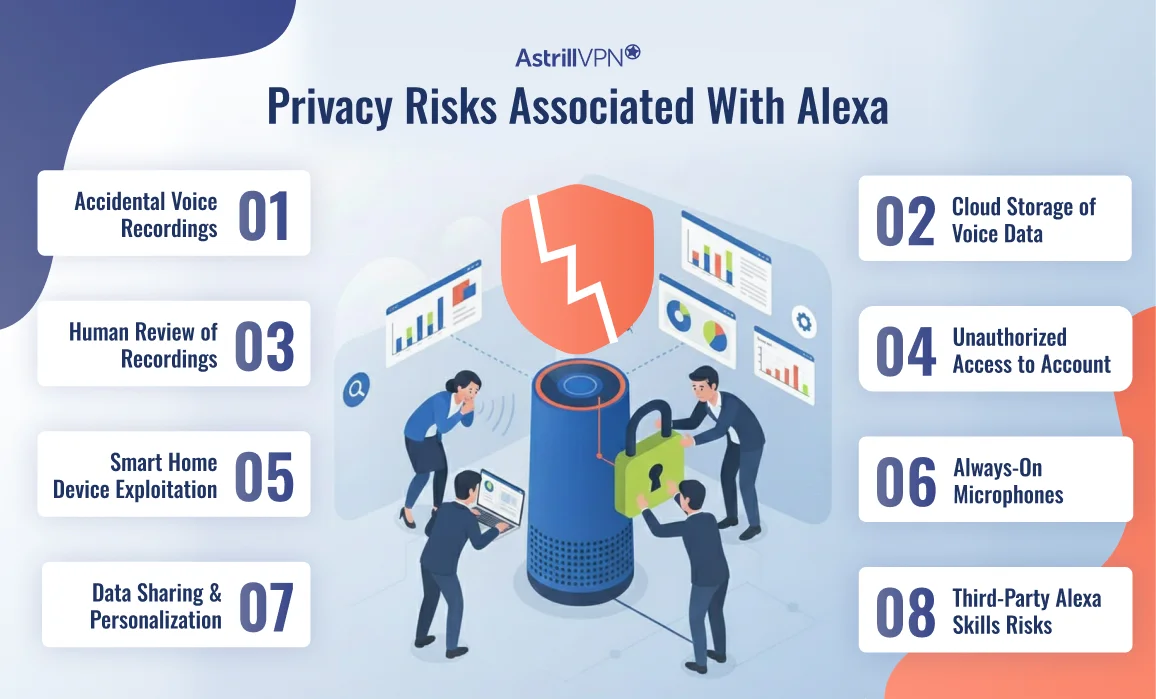
Amazon Alexa offers convenience and smart home control, but like all voice-enabled devices, it also introduces certain privacy risks. While Alexa is not designed to spy on users, understanding these risks helps users make informed decisions and better protect their personal data.
1. Accidental Voice Recordings
One of the most common privacy risks is unintentional recording. Alexa may mistakenly activate after hearing a word or sound similar to its wake word. When this happens, short audio clips of nearby conversations may be recorded and sent to Amazon’s servers without the user immediately being aware of it.
2. Cloud Storage of Voice Data
Alexa processes voice commands in the cloud, which means recordings are stored on Amazon’s servers. While Amazon provides controls to review and delete recordings, storing data externally always carries some level of risk, including potential data breaches or unauthorized access.
3. Human Review of Recordings
To improve Alexa’s speech recognition, a small sample of anonymized voice recordings may be reviewed by human contractors. Although this process follows privacy guidelines, it has raised concerns among users who are uncomfortable with human access to voice data.
4. Unauthorized Access to Alexa Accounts
If an Alexa account is compromised, attackers may gain access to:
- Voice recordings
- Smart home controls
- Personal preferences and routines
5. Smart Home Device Exploitation
Alexa often connects to other smart devices such as locks, cameras, and thermostats. If Alexa or the connected devices are misconfigured or poorly secured, attackers could manipulate these systems.
6. Always-On Microphones
Although Alexa only actively records after activation, the presence of always-on microphones makes some users uncomfortable. The perception of constant listening contributes to privacy anxiety, particularly in private spaces such as bedrooms.
7. Data Sharing and Personalization
Alexa may use interaction data to personalize responses and recommendations. If privacy settings are not adjusted, this data may also contribute to targeted advertising insights, which some users view as intrusive.
8. Third-Party Alexa Skills Risks
Third-party Alexa Skills may request access to certain information. Poorly designed or malicious skills could misuse data if users grant excessive permissions without reviewing them carefully.
How to Keep Alexa Private?
Amazon Alexa can be a helpful intelligent assistant, but protecting your privacy requires taking a few proactive steps. By adjusting settings and using Alexa more thoughtfully, you can significantly reduce the risk of unwanted data collection and accidental recordings.
1. Review and Delete Voice Recordings Regularly
Alexa stores voice recordings to improve performance. You can:
- Open the Alexa app
- Go to Settings → Privacy → Voice History
- Listen to and delete recordings.
- Enable automatic deletion (every 3 or 18 months)
2. Mute the Microphone When Not in Use
All Alexa devices have a physical microphone off button. When pressed, the microphone is electrically disabled, and Alexa is unable to listen or record. Use this feature during private conversations or when Alexa is not needed.
3. Change the Wake Word
Changing the default wake word reduces the likelihood of accidental activations. You can choose alternatives like “Echo,” “Amazon,” or “Computer,” which may be less likely to trigger unintentionally.
4. Disable Human Review of Recordings
You can opt out of having your voice recordings reviewed by humans:
- Open the Alexa app
- Go to Settings → Privacy → Manage Your Alexa Data
- Turn off Help Improve Alexa
5. Limit Data Sharing and Personalization
These options can be controlled under Alexa’s privacy settings. Adjust settings to prevent Alexa from using voice data for:
- Personalized ads
- Product improvement
- Skill recommendations
6. Secure Your Amazon Account
A secure account prevents unauthorized access to recordings and smart home controls. Protect your Alexa data by:
- Using a strong, unique password
- Enabling two-factor authentication (2FA)
- Monitoring account activity regularly
7. Review and Remove Unnecessary Alexa Skills
Third-party Alexa Skills may request access to personal information. Periodically:
- Review enabled skills
- Remove skills you no longer use
- Avoid skills from unknown or untrusted developers.
8. Place Alexa Devices Thoughtfully
Avoid placing Alexa devices in sensitive locations such as:
- Bedrooms
- Bathrooms
- Home offices
9. Keep Devices and Apps Updated
Software updates often include security and privacy improvements. Ensure:
- Alexa devices update automatically
- The Alexa app is kept up to date
Amazon Alexa Usage and Market Statistics (2025)
- As of 2025, there are over 600 million Alexa-powered devices in use worldwide, encompassing Echo speakers, smart displays, TVs, headphones, and third-party devices.
- More than 600 million Echo and Alexa-enabled units have been sold globally, making Alexa one of the most widely adopted voice assistants.
- Amazon Echo devices with Alexa command a significant share of the U.S. smart speaker market, with around 68–70% usage among smart speaker owners.
- In specific reports, Alexa holds a 65% share of the overall U.S. smart speaker market.
Common Myths About Alexa Spying
Concerns about smart speakers have led to many misconceptions about how Amazon Alexa works. While privacy awareness is essential, not everything said about Alexa spying is accurate. Below are some of the most common myths, along with the facts that explain what’s really happening.
Myth 1: Alexa Records Everything You Say
Reality:
Alexa does not record conversations 24/7. It continuously listens only for its wake word. Audio is recorded and sent to Amazon’s servers only after the wake word is detected. Until then, sound is processed locally on the device.
Myth 2: Alexa Is a Government or Surveillance Tool
Reality:
Alexa is a consumer intelligent assistant, not a surveillance device. Amazon states that Alexa recordings are used to improve services and respond to user requests, not to monitor individuals for government or law enforcement purposes without legal requirements.
Myth 3: Amazon Employees Spy on Users
Reality:
Trained analysts may review a small number of anonymized recordings to enhance Alexa’s speech recognition capabilities. This process is limited, optional, and controlled by privacy settings. Users can opt out at any time.
Myth 4: Alexa Listens Even When the Microphone Is Off
Reality:
When you press the microphone off button, Alexa’s microphones are physically and electronically disabled. The device cannot hear or record anything until the microphone is turned back on.
Myth 5: Alexa Sells Your Conversations
Reality:
Amazon states that it does not sell personal voice recordings. While Alexa data may contribute to service improvement or advertising insights, raw voice recordings are not sold to third parties.
Myth 6: Alexa Can Secretly Spy Through Other Smart Devices
Reality:
Alexa only interacts with other smart devices based on user permissions and commands. It cannot independently spy through connected devices without user setup or authorization.
Myth 7: Alexa Is Always Actively Listening to Conversations
Reality:
Alexa is always listening for the wake word, but that does not mean it is actively monitoring or recording conversations. Continuous listening for a trigger is different from recording or storing audio.
Conclusion
Alexa is not a spying device, but it does rely on constant listening to function effectively. While it does not intentionally record conversations, accidental activations and cloud data storage raise valid concerns about privacy. By understanding how Alexa works and using available privacy controls, users can enjoy the benefits of intelligent assistants while maintaining greater control over their personal data.
FAQs
Here are some frequently asked questions.
Alexa may record audio if it mistakenly detects the wake word, but it does not intentionally record private conversations.
Alexa always listens for its wake word but does not actively record or transmit audio unless activated.
You can mute the microphone, review and delete voice history, limit data sharing, secure your Wi-Fi, and place Alexa in non-sensitive locations.

Secure your privacy instantly. Try AstrillVPN with zero risk.
About The Author


No comments were posted yet