
BGP Hijacking Explained: What It Is, How It Works & Prevention

Arsalan Rathore
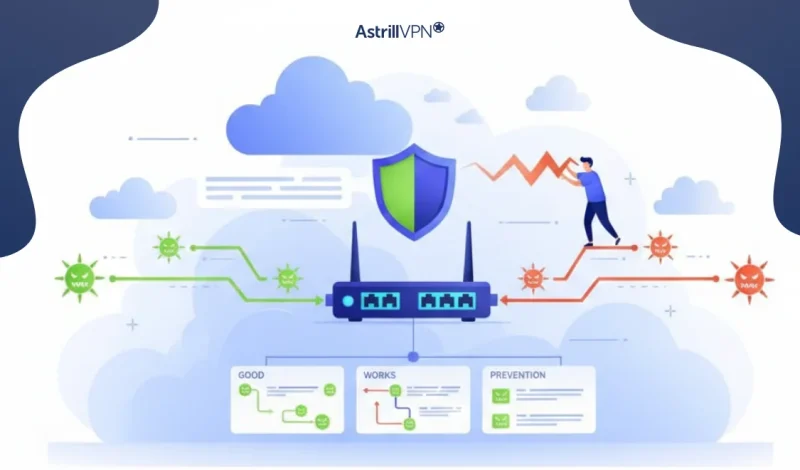
When you use a website, start a video call, or connect to a secure service, your data travels through various networks owned by internet providers, cloud services, governments, and businesses. BGP is the routing system that directs this data.
BGP operates in the background, making rapid decisions about data paths. When it functions well, the internet feels fast and stable, but if misconfigured or misused, it can redirect traffic unexpectedly or lead to data loss.
BGP hijacking is a serious issue. It reveals a weakness in how the internet routes data, causing outages, exposing private information, and damaging trust in online services.
This guide explains what BGP is, its vulnerabilities, what BGP hijacking looks like, and how it occurs, along with ways to mitigate risks in the global network.
Table of Contents
What Does BGP Stand for in Networking?
BGP stands for Border Gateway Protocol. In networking, it is the system that enables different networks worldwide to communicate with each other and exchange routing information.
The internet is not a single network. It is a collection of tens of thousands of independent networks, collectively referred to as autonomous systems. These include internet service providers, cloud platforms, enterprises, governments, and large content networks. BGP is the protocol that connects them.
When people ask what BGP stands for in networking, the simple answer is that it is the protocol that decides how traffic moves between networks. Without BGP, the global internet as we know it would not function.
What Role Does BGP Play?
BGP acts as the routing brain of the internet. Each autonomous system uses BGP to announce which IP address ranges it controls and which paths can be used to reach them.
Routers running BGP exchange this information constantly. Based on these announcements, they build routing tables that decide where to send traffic. When you visit a website, stream a video, or connect to a VPN, BGP helps determine the route your data takes across countries, providers, and infrastructure.
How BGP Routing Works
BGP does not measure speed or security. It evaluates paths based on policy and reachability. Routers compare multiple possible routes and select the one they believe is the best path, based on attributes such as AS path length and routing preferences.
The critical detail is this. BGP largely trusts the information it receives. When a network announces that it can reach a certain destination, other networks typically accept that claim and propagate it further.
That design decision is what makes BGP scalable. It is also what makes it vulnerable.
Why the BGP Protocol Is Inherently Insecure?
BGP was created in a smaller, more cooperative Internet. Security was not the primary concern. Reachability was.
There is no built-in mechanism that forces a network to prove it owns the IP ranges it announces. There is no default cryptographic validation of route authenticity. Routers generally assume that other networks are truthful.
These architectural choices created deep BGP vulnerabilities. Any network that participates in BGP can accidentally or intentionally announce routes it does not control. If those announcements appear more attractive than legitimate ones, large portions of the internet may accept them.
This is not a software bug. It is a structural weakness. It is why BGP hijacks continue to happen decades after the protocol was introduced.
What Is BGP Hijacking?
BGP hijacking occurs when a network falsely advertises ownership of IP prefixes it does not control, resulting in internet traffic being misrouted.
In simple terms, a BGP hijack tricks the Internet into sending traffic to the wrong place.
This can happen when a network mistakenly announces incorrect routes, or when an attacker deliberately injects false routing information. Once those routes propagate, traffic intended for legitimate services can be redirected to the hijacker’s infrastructure.
BGP hijacking is often used interchangeably with BGP route hijacking and route hijacking. All describe the same core problem. False routing announcements that divert traffic away from its rightful destination.
Types of BGP Hijacks and BGP Attacks
Accidental BGP Hijacks
Many BGP hijacks are not malicious. They result from configuration errors, leaked routes, or improper filtering.
A single incorrect announcement by a provider can unintentionally redirect massive volumes of global traffic. These incidents often cause widespread outages and instability, even when there is no attacker involved.
Malicious BGP Attacks
A BGP attack occurs when false route announcements are used intentionally.
Attackers may hijack routes to intercept traffic, impersonate online services, steal data, bypass geographic controls, or disrupt operations. Some hijacks are designed to silently observe traffic. Others aim to blackhole it entirely.
Because BGP operates at the routing layer, these attacks can affect everything above it, including websites, email systems, cloud services, and VPN connections.
How BGP Hijacking Works Step by Step
Step 1: An attacker selects a target route by choosing an IP prefix that belongs to a legitimate organization, such as a bank, cloud service, or DNS provider. The goal is to make the internet believe the attacker can reach that destination.
Step 2: The attacker’s network, or a compromised or misconfigured network, announces that it is the origin for that prefix, or announces a more specific version of the prefix. This is the moment the lie enters the routing system.
Step 3: Because BGP is trust-based, many networks accept the route unless they have strong filtering and validation mechanisms in place. Once accepted, it can spread outward to peers and upstream providers.
Step 4: The hijacked path can look “better” to routers for a few reasons. It might be more specific, appear shorter, or align with local routing policy. Routers then prefer it over the legitimate route.
Step 5: Users trying to reach the real destination are silently routed to the attacker’s network instead. At this point, the attacker can do one of three things:
- Blackhole traffic to cause an outage.
- Intercept traffic to observe it.
- Relay traffic back to the real destination to stay stealthy,
Step 6: This can mean credential theft, session hijacking attempts, ad fraud, crypto redirection, surveillance, or disruption. Even when encryption protects content, metadata and availability can still be impacted.
Step 7: Routes can be withdrawn quickly, but recovery takes longer. Networks need to reconverge, caches need to update, and operators often have to identify where filtering or validation failed.
Real World BGP Hijacking Incidents
BGP hijacks have caused some of the most significant internet outages in history. In one well-known case, a mistaken route announcement by a national ISP effectively took a central global platform offline for users worldwide.
There have also been documented incidents where BGP hijacks were used to redirect traffic to malicious servers, allowing them to steal cryptocurrency, harvest credentials, or spy on communications.
These cases highlight an uncomfortable reality. BGP hijacking is not theoretical. It has been used to disrupt economies, compromise data, and silently manipulate internet traffic.
Impact and Risks of BGP Hijacks
The consequences of BGP hijacks extend far beyond websites going offline.
They can cause large-scale service outages that affect banks, healthcare systems, logistics platforms, and communication tools. They can enable traffic interception, allowing attackers to monitor unencrypted data or attempt man-in-the-middle attacks. They can lead to financial losses, regulatory exposure, and long-term damage to one’s reputation and trust.
Because routing sits beneath nearly every internet service, a successful hijack undermines security controls that exist higher in the stack.
How to Detect BGP Hijacking and Route Hijacking Events?
Detecting BGP hijacking is fundamentally about visibility. Because routing changes happen constantly across the global internet, the challenge is not just seeing updates, but recognizing when something is wrong.
Most hijacks are discovered when a route suddenly appears from an unexpected network, when traffic paths change in unusual ways, or when large portions of the internet start reaching a destination through a provider that has no legitimate relationship to it.
Monitoring abnormal route announcements
Network operators and security teams monitor global BGP feeds to track how IP prefixes are being announced and by whom. A potential hijack is often flagged when:
• An unfamiliar autonomous system starts originating a prefix it does not own
• A more specific prefix appears that overrides a legitimate route
• A route’s origin changes without a known operational reason
• Path structures shift abruptly across many networks at once
Using real-time BGP monitoring systems
Specialized monitoring platforms continuously collect routing data from thousands of vantage points around the world. These systems analyze updates as they happen and alert operators when suspicious behavior appears.
They look for patterns that human operators cannot easily track at scale, such as rapid global propagation, conflicting origins, or policy violations. This kind of real time visibility is critical because BGP hijacks can spread in minutes.
Correlating routing changes with traffic behavior
Detection does not rely on routing data alone. Sudden drops in availability, unexpected latency spikes, certificate warnings, or traffic flowing through unfamiliar regions can all indicate that traffic is being misrouted.
When routing anomalies line up with service disruptions or unexplained traffic shifts, it significantly increases confidence that a hijack may be in progress.
How to Prevent and Mitigate BGP Hijacking
RPKI and Route Origin Validation
Resource Public Key Infrastructure allows networks to cryptographically verify which autonomous systems are authorized to announce specific IP ranges. When implemented correctly, it can block many unauthorized route announcements before they propagate.
Route Filtering and Prefix Controls
ISPs and network operators can apply strict filtering policies to ensure customers only announce approved routes. Prefix limits, peer validation, and continuous audits all reduce exposure.
Additional Network Security Practices
No single control solves BGP security. Effective mitigation involves combining technical validation, operational discipline, monitoring, and cooperation among providers.
For users and businesses, layered security still matters. Even when routing is compromised, encrypted connections, authenticated services, and privacy focused tools such as secure VPNs help reduce the damage a hijack can cause.
Role of VPN in the Context of BGP Hijacking
A VPN cannot prevent a BGP hijack. Routing decisions occur between networks, outside the control of end-users and applications.
Where a VPN becomes valuable is when routing is compromised.
When a BGP hijack redirects traffic through unintended networks, the main risks are interception and manipulation. A secure VPN encrypts data before it leaves the device, so even if traffic is misrouted, its contents remain protected. Attackers may be able to redirect packets, but they cannot easily read or alter what is inside the encrypted tunnel.
VPNs can also help maintain access during routing disruptions. If a local ISP path is affected by a hijack, connecting to a VPN often shifts traffic onto different upstream routes, sometimes restoring connectivity through unaffected networks.
Real World BGP Hijacking Incidents
Below are recent, well-documented routing security incidents, including confirmed hijacks and closely related route leaks. These matters because, in practice, users experience them the same way: traffic goes where it should not.
1) Cloudflare 1.1.1.1 disruption tied to BGP hijacking and a route leak
On June 27, 2024, Cloudflare reported that a portion of users saw 1.1.1.1 become unreachable or degraded, and described the root cause as a mix of BGP hijacking and a route leak.
2) Route hijack impacting a US regional research and education network
In July 2024,Internet2 documented a route hijack targeting a US-based regional network, where a commercial network announced more specific routes, disrupting critical services.
3) Root server address prefixes hijacked
On June 20, 2025, routes for several root server address prefixes appeared to originate from an unauthorized autonomous system, and the report notes that the bogus routes were present for approximately one hour and thirty minutes. This is significant because it touches the DNS root infrastructure.
4) Large route leak with many routes that would be invalid under RPKI validation
On May 1, 2025, APNIC analyzed a route leak involving thousands of routes, noting that most of the leaked routes would be considered RPKI invalid by a validating router. This is not always a “hijack” in intent, but it shows how quickly unsafe routing information can spread when guardrails are missing.
5) Venezuela BGP route leak analysis
Cloudflare published an analysis on January 6, 2026, regarding a BGP anomaly in Venezuela, describing it as likely accidental and linking the discussion to the importance of stronger routing policy and validation adoption. Again, a route leak rather than a confirmed malicious hijack, but highly relevant to real-world routing risks.
Conclusion
BGP hijacking is not a fringe threat. It is a direct consequence of how the internet routes traffic.
Understanding what BGP is, how route hijacking works, and why BGP vulnerabilities persist helps explain why large scale outages and traffic redirection events continue to happen.
Securing the internet requires improvements at the routing level. It also requires organizations and users to protect what travels over those routes. Privacy, encryption, and trusted network paths all play a role in limiting the impact when the global routing system fails.
FAQs
BGP hijacking is a routing-level attack that targets how traffic is directed across the internet. It works by injecting false routing information into the Border Gateway Protocol so traffic meant for a legitimate network is redirected elsewhere. Depending on intent, it can be used for interception, impersonation, surveillance, or large-scale service disruption.
Common BGP vulnerabilities come from the protocol’s trust-based design. BGP does not natively verify whether a network is authorized to announce a specific IP range. This allows:
• Unauthorized route announcements
• Prefix hijacking using more specific routes
• Route leaks between networks
• Lack of cryptographic route validation
• Widespread propagation of incorrect routing data
Route hijacking in networking is when traffic is diverted from its legitimate path to an unauthorized network. This happens when incorrect or fraudulent routing information causes routers to send data to the wrong destination. BGP hijacking is the most common form of route hijacking on the public internet.
No. Many BGP hijacks are accidental, caused by misconfigurations, software errors, or poor routing policies. However, the same weaknesses are also exploited deliberately in malicious BGP attacks. The impact can be equally severe whether the hijack is intentional or not.
A BGP attack is considered high impact because it operates at the core routing layer of the internet. It can cause widespread outages, redirect traffic across countries, expose sensitive data, disrupt cloud platforms, and affect millions of users at once. Because BGP influences everything above it, the consequences can extend across entire industries.
Yes. BGP hijacking can affect any website or online service, including major platforms, cloud providers, financial systems, and DNS infrastructure. Multiple large-scale incidents have shown that even the biggest networks are vulnerable when false routes propagate across the global routing system.

Secure your privacy instantly. Try AstrillVPN with zero risk.
About The Author


No comments were posted yet