




What is DNS Hijacking? How It Works & How to Prevent It

As your organization operates online, it is constantly under siege from cyber threats, many of which evade detection until irreversible damage is done. Among the stealthiest is DNS hijacking, a technique by which attackers redirect your traffic to malicious sites, intercept sensitive data, or inject malware without raising alarms. According to DNSFilter’s 2025 Annual Security Report, one in every 174 DNS requests is malicious, up significantly from one in every 1,000 in the previous report.
In this article, we will deconstruct how DNS hijacking works, identify emerging attack patterns, and guide you through a fortified, multi-layered defense framework. By the end, you will be equipped with concrete, actionable steps to
Table of Contents
What is DNS hijacking?
DNS hijacking is a malicious cyber attack where hackers redirect your web traffic to fraudulent websites. This process exploits vulnerabilities in the Domain Name System (DNS), translating human-readable domain names into IP addresses. When successful, attackers can intercept sensitive information, spread malware, or display fake content.
There are several methods attackers use to hijack DNS:
- Malware infection on user devices
- Compromising routers or DNS servers
- Exploiting vulnerabilities in DNS software
DNS hijacking can have severe consequences, including identity theft, financial fraud, and reputational damage to businesses. To protect against these threats, it’s crucial to implement robust cybersecurity measures and stay vigilant about unusual online behavior.
How Does DNS Hijacking Work?
DNS hijacking exploits vulnerabilities in the Domain Name System to redirect users to malicious websites. This attack typically involves compromising DNS servers or modifying local DNS settings on a victim’s device. Cybercriminals may employ various techniques, such as:
- Malware infection: Malicious software alters DNS configurations
- Router manipulation: Attackers change DNS settings on home or office routers
- Man-in-the-middle attacks: Intercepting and modifying DNS queries in transit
Once successful, the attacker can divert traffic to fake websites, enabling phishing scams, malware distribution, or ad fraud. Users may unknowingly enter sensitive information on these fraudulent sites, believing they’re accessing legitimate services. DNS hijacking poses significant risks to both individuals and organizations, potentially leading to data theft, financial losses, and reputational damage.
DNS hijacking attack types
DNS hijacking refers to an attacker interfering with the Domain Name System (DNS) resolution process, causing users to be directed to malicious or unintended destinations. Here are the common types explained in plain language.
1. DNS cache poisoning
Attackers inject false DNS records into a resolver cache. When users request a legitimate domain, the resolver returns the attacker-controlled IP address instead. Cache poisoning can affect any devices that rely on the compromised resolver and can persist until the bad record expires.
2. Rogue DNS server and DNS settings tampering
Malware or an attacker changes the DNS server settings on a device or router, causing queries to be sent to a malicious resolver. From that resolver, the attacker can return malicious addresses, intercept credentials, or serve phishing sites while appearing normal to the user.
3. Router and gateway hijacking
Attackers can reconfigure home or office routers with default or weak credentials. The router starts handing out malicious DNS addresses to every device on the network through DHCP. This is an effective way to intercept multiple users simultaneously.
4. Man in the middle DNS interception
On an untrusted network, an attacker sits between a user and the DNS resolver, intercepting DNS queries. The attacker can alter responses in real-time or forward queries to a malicious resolver, redirecting traffic.
5. DNS rebinding attacks
An attacker uses DNS records that change frequently to bypass same-origin restrictions in browsers and web apps. This can allow a malicious webpage to access services on a user device or local network that would otherwise be protected.
6. NXDOMAIN or wildcard hijacking
Some hijackers replace legitimate NXDOMAIN responses with pages that contain ads or links to phishing pages. Instead of a standard browser error, users see content controlled by the attacker or a third party that benefits from the traffic.
7. DNS tunneling for data exfiltration
Rather than redirecting users, attackers encode commands or data inside DNS queries and responses to tunnel information out of a network. This technique is stealthy because DNS traffic is often allowed and rarely inspected.
8. ISP or upstream provider interception
A compromised or malicious ISP-level resolver can alter DNS responses or inject content for users. In some jurisdictions, ISPs have been observed redirecting failed lookups to ad pages or intercepting and modifying DNS traffic for commercial or surveillance purposes.
How to Detect DNS Hijacking?
Detecting DNS hijacking requires vigilance and the right tools.
- Start by regularly monitoring your DNS settings for any unauthorized changes. Unexpected redirects to unfamiliar websites or sudden drops in website traffic can be telltale signs.
- Utilize DNS monitoring services that alert you to suspicious activities or alterations in your DNS records.
- Perform frequent security audits of your network infrastructure, focusing on DNS servers and configurations.
- Watch for unusual latency in DNS resolutions, as this may indicate malicious interference. Implement DNSSEC (Domain Name System Security Extensions) to authenticate DNS responses and prevent tampering.
DNS hijacking attack types
DNS hijacking can occur through various methods, each posing unique threats to your online security.
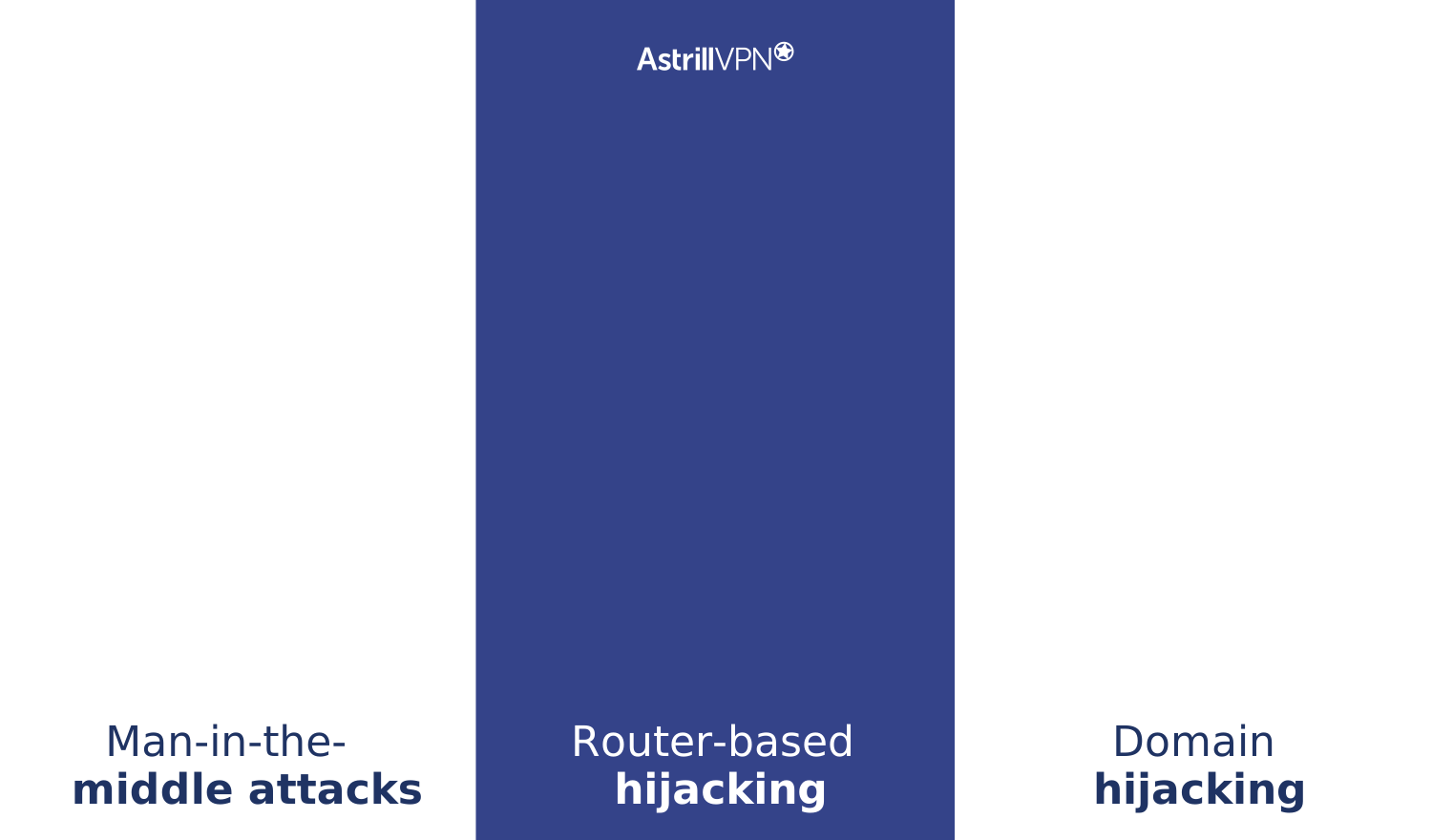
- Man-in-the-middle attacks involve intercepting communications between users and DNS servers, redirecting traffic to malicious sites.
- Router-based hijacking targets vulnerable home or office routers, altering their DNS settings. Malware infections can modify local DNS settings on individual devices, while rogue DNS servers can compromise entire networks.
- Domain hijacking involves unauthorized changes to domain registrations, potentially rerouting all traffic associated with a domain.
Understanding these attack types is crucial for implementing effective defensive strategies and safeguarding your digital presence.
How To Prevent DNS Hijacking?
Implement a multi-layered approach to safeguard against DNS hijacking.
Use a Reputable DNS provider
Start using a reputable DNS provider and enable DNSSEC (Domain Name System Security Extensions) to authenticate DNS responses. Then, regularly update your router’s firmware and change the default login credentials to prevent unauthorized access.
Strengthen Your Network
Utilize a Virtual Private Network (VPN) to encrypt your internet traffic and mask your true IP address. Enable two-factor authentication (2FA) on all accounts, especially for domain registrars and DNS management platforms. Regularly monitor your DNS settings for any suspicious changes or unauthorized alterations.
Educate and Stay Vigilant
Train your team to recognize phishing attempts and social engineering tactics. Stay informed about the latest DNS security threats and best practices to defend against hijacking attacks robustly.
Recent DNS Hijacking Incidents
DNS hijacking remains one of the most frequently exploited attack vectors in 2025. Cybercriminals are finding new ways to manipulate DNS infrastructure—either by redirecting traffic, compromising subdomains, or registering malicious domains. Below are some of the most recent and alarming incidents that highlight the growing threat.
1. Subdomain Hijacking Through Misconfigured DNS Records
In early 2025, security researchers discovered that threat actors were hijacking inactive or misconfigured subdomains belonging to major organizations, including Bose, Panasonic, and even the Centers for Disease Control and Prevention (CDC).
This technique, often referred to as “dangling DNS,” occurs when old DNS entries continue to point to decommissioned cloud resources. Attackers exploit these abandoned records to host malware or phishing pages under legitimate domains, making detection extremely challenging.
2. DNS Malware Campaign Infecting Over 30,000 Websites
A large-scale malware campaign known as DetourDog compromised more than 30,000 websites by redirecting DNS traffic through malicious servers. The attack injected harmful payloads, including Strela Stealer malware, onto unsuspecting visitors’ devices.
This campaign demonstrated how attackers can exploit DNS resolution to redirect legitimate web traffic to malicious destinations without any visible changes to the site.
3. Surge in Malicious Domain Registrations
According to the Infoblox 2025 DNS Threat Landscape Report, more than 25 percent of the 100 million new domains observed last year were classified as malicious or suspicious. Many of these domains were utilized in phishing and redirection schemes aimed at hijacking DNS traffic and stealing user data.
This sharp rise in malicious registrations demonstrates that DNS abuse is not limited to hijacking existing domains but extends to creating entirely new ones for exploitation.
4. Spike in Phishing Domains Linked to DNS Abuse
The NetBeacon Institute reported that in March 2025, over 47,000 unique domain names were linked to phishing campaigns, marking a 63 percent increase from the previous month. A significant portion of these domains was registered through a small number of registrars, highlighting ongoing DNS abuse and poor registrar oversight.
This surge underscores the continued popularity of DNS infrastructure as a favored tool for cybercriminals to launch large-scale phishing and redirection attacks.
Best Practices for Securing Your DNS Infrastructure
Implement these crucial security measures to fortify your DNS infrastructure against hijacking attempts.
- First, enable DNSSEC (Domain Name System Security Extensions) to authenticate DNS responses and prevent cache poisoning attacks.
- Update and patch your DNS software regularly to address known vulnerabilities. Implement strong access controls, including multi-factor authentication, for DNS management interfaces.
- Use reputable, secure DNS providers and consider redundant DNS servers for improved resilience.
- Monitor DNS traffic for anomalies and set up alerts for unauthorized changes.
- Educate your team about DNS security best practices and phishing risks.
- Finally, conduct regular security audits and penetration testing to identify and address potential weaknesses in your DNS infrastructure.
What is DNS redirection?
DNS redirection is a key component of DNS hijacking attacks. In this technique, cybercriminals alter DNS settings to divert traffic from legitimate websites to malicious ones. This can happen at various levels:
Router-level redirection
Attackers may compromise home or business routers, changing their DNS settings to redirect all connected devices.
ISP-level attacks
More sophisticated hijackers might target Internet Service Providers, affecting numerous users simultaneously.
Device-specific redirection
Malware on individual devices can modify local DNS settings, bypassing network-level protections.
To defend against DNS redirection, regularly update router firmware, use reputable DNS servers, and implement DNSSEC. Monitoring network traffic for unusual patterns can also help detect potential DNS hijacking attempts early.
How does AstrillVPN prevent DNS hijacking?
AstrillVPN employs robust measures to safeguard users against DNS hijacking attempts. By encrypting all DNS requests, the VPN ensures that malicious actors cannot intercept or manipulate your online queries. This encryption extends to both incoming and outgoing traffic, creating a secure tunnel for your data.
Additionally, AstrillVPN utilizes its own DNS servers, bypassing potentially compromised public DNS resolvers. This approach significantly reduces the risk of falling victim to DNS spoofing or cache poisoning attacks. The VPN’s advanced DNS leak protection further fortifies your online presence, preventing accidental exposure of your true IP address or location.
By implementing these comprehensive security features, AstrillVPN provides a formidable defense against DNS hijacking, ensuring your online activities remain private and secure.
Protect Your Data from Online Scams with AstrillVPN
Get AstrillVPN Now
Responding to a DNS Hijacking Incident
Immediate Action Steps
Swift response is crucial when faced with a DNS hijacking attack.
- Immediately contact your DNS provider to verify and rectify any unauthorized changes.
- Simultaneously, alert your IT security team to initiate a thorough investigation of your network infrastructure.
- Change all passwords associated with DNS management accounts and implement two-factor authentication if it is not already in place.
Post-Incident Analysis
- After mitigating the immediate threat, conduct a comprehensive post-mortem analysis.
- Review access logs, examine system vulnerabilities, and identify the attack vector. This information is vital for strengthening your defenses against future incidents and updating your incident response plan accordingly.
- Consider engaging a cybersecurity firm to perform an independent assessment and provide recommendations for enhancing your DNS security posture.
DNS hijacking cases
DNS hijacking incidents have become increasingly prevalent in recent years, posing significant threats to organizations and individuals alike.
- Notable cases include the 2013 attack on The New York Times, where hackers redirected traffic to a malicious server.
- In 2018, a massive DNS hijacking campaign targeted government and telecommunications entities across the Middle East and North Africa.
- In 2020, cybercriminals exploited vulnerabilities in home routers to redirect users to fake COVID-19 information sites.
- The Sitting Ducks attack allows cybercriminals to take control of a domain by manipulating its DNS configurations. In July 2024, Infoblox Threat Intel launched a monitoring initiative. They found that 800,000 domains were vulnerable, with approximately 70,000 already hijacked.
These incidents underscore the critical importance of robust DNS security measures and the need for constant vigilance against evolving cyber threats.
Conclusion
As you implement strategies to defend against DNS hijacking, remember that a layered approach is crucial. Regularly update and patch your systems, use DNSSEC to authenticate DNS responses, and monitor your network for suspicious activity. Educate your team about phishing threats and social engineering tactics that could compromise DNS security.
By staying vigilant and proactive, you can significantly reduce the risk of falling victim to DNS hijacking attacks. While no security measure is foolproof, combining these best practices will strengthen your overall cybersecurity posture and help safeguard your organization’s critical data and online presence. Remain informed about emerging threats and continue to adapt your defenses accordingly.
FAQs
To safeguard your systems:
Use DNSSEC (Domain Name System Security Extensions)
Regularly update and patch DNS software
Implement strong password policies
Monitor DNS traffic for suspicious activity
Educate employees about phishing and social engineering tactics
Watch for unexpected changes in website appearance, slow loading times, or security warnings from browsers. If you suspect DNS hijacking, contact your IT department or service provider immediately for assistance.
DNS hijacking can occur through various means, each exploiting vulnerabilities in the DNS infrastructure or user systems. Understanding these causes is crucial for implementing effective defense strategies against DNS hijacking attempts.

Secure your privacy instantly. Try AstrillVPN with zero risk.
About The Author
No comments were posted yet