




Is Poshmark Safe? What Buyers and Sellers Need to Know

Poshmark has become one of the go-to destinations for secondhand fashion, and for good reason. The platform is convenient, the community is active, and the deals can be genuinely impressive. But any marketplace where strangers exchange money and goods attracts its share of bad actors, so the question of whether Poshmark is safe is one worth taking seriously.
The short answer is yes, with real caveats. Poshmark is a legitimate platform with functioning buyer protections and secure payment processing. That said, being legit as a company does not automatically make every transaction on it risk-free. Knowing how the platform works, where the gaps are, and what Poshmark scams look like is what actually keeps you protected.
This guide breaks down both sides of that picture so you can buy and sell with confidence.
Table of Contents
What Is Poshmark and How Does It Work?
Poshmark launched in 2011 as a fashion resale platform and has grown into one of North America’s largest peer-to-peer marketplaces. In January 2023, it was acquired by South Korean tech conglomerate Naver Corporation for $1.2 billion. The platform covers everything from clothing and shoes to beauty products and home goods, with over 80 million registered users and more than 200 million active listings.
What makes Poshmark distinct from a typical resale site is its social layer. Users follow each other, share listings, leave “love notes” as reviews, and join virtual shopping events called Posh Parties. It feels more like a community than a marketplace, which is part of its appeal.
On the fee side: Poshmark charges a flat $2.95 on sales under $15, and a 20% commission on sales of $15 or more. Buyers pay upfront, but the seller doesn’t receive the funds until the buyer confirms delivery, or three days pass after delivery without a complaint.
Is Poshmark Legit?
Yes. Poshmark is a real, registered company. It was publicly listed on NASDAQ before its acquisition by Naver in 2023. It has functioning buyer protections, a support team, secure payment processing, and a track record of millions of completed transactions. If you’re asking is poshmark a legit site, the answer is yes without qualification.
The follow-up question matters more, though: does being legit mean every seller or buyer on it is trustworthy? Not necessarily. Poshmark sets the rules, but it can’t vet every person who creates an account. Scammers find their way onto most peer-to-peer platforms, and Poshmark is no exception. Is Poshmark reliable as a platform? Yes. Are all transactions guaranteed to go smoothly? That depends on who you’re dealing with.
Is Poshmark Safe to Buy From? Understanding Posh Protect
For buyers, the most important thing to understand is Posh Protect, Poshmark’s built-in buyer protection policy. Here’s how it works.
When you purchase something, your payment is processed immediately through Poshmark’s system, but the seller doesn’t receive the money yet. Poshmark holds it. Once the item arrives, you have three days to inspect it. If it never shows up, arrives damaged, or looks nothing like the listing, you can open a case and Poshmark will review it. Approved cases get a full refund.
After those three days, if you haven’t flagged a problem, the payment is automatically released to the seller. That window is your protection. Miss it, and the sale is final.
For luxury items valued at $500 or more, Poshmark offers a free authentication service. The item is reviewed by Poshmark’s verification team before being forwarded to you. That’s a meaningful safeguard, though it creates an obvious gap: anything priced just under $500 skips that review entirely, and some sellers price deliberately to avoid it.
As for payment security, all transactions run through Poshmark’s encrypted system. Your card details are never shared with individual sellers, which aligns with what you’d expect from any legitimate e-commerce platform.
Is Poshmark safe to buy from? Generally, yes, provided you stay within the app, communicate only through official channels, and act within that three-day window when anything goes wrong.
Is Poshmark Safe for Sellers?
Sellers get their own set of protections and risks.
Every order comes with a prepaid USPS Priority Mail shipping label. If a package gets lost in transit and you used the Poshmark label, you’re covered. Orders over $400 also require a signature upon delivery, adding a verification layer to higher-value sales.
Poshmark’s dispute process is worth understanding, too. If a buyer files a false complaint, the Poshmark team reviews the claim before issuing a refund automatically. If your item was accurately described and photographed, a bogus return attempt can be denied. The system isn’t perfect, but it’s not just buyer-favored either.
The bigger vulnerability for sellers isn’t Poshmark’s policies. It’s buyers who know how to work around them. This is where the scam section becomes important.
Common Poshmark Scams You Need to Know About
Understanding Poshmark scams is the most useful thing you can do before listing or buying anything. These aren’t edge cases. They happen regularly, and some of them are surprisingly well-crafted.
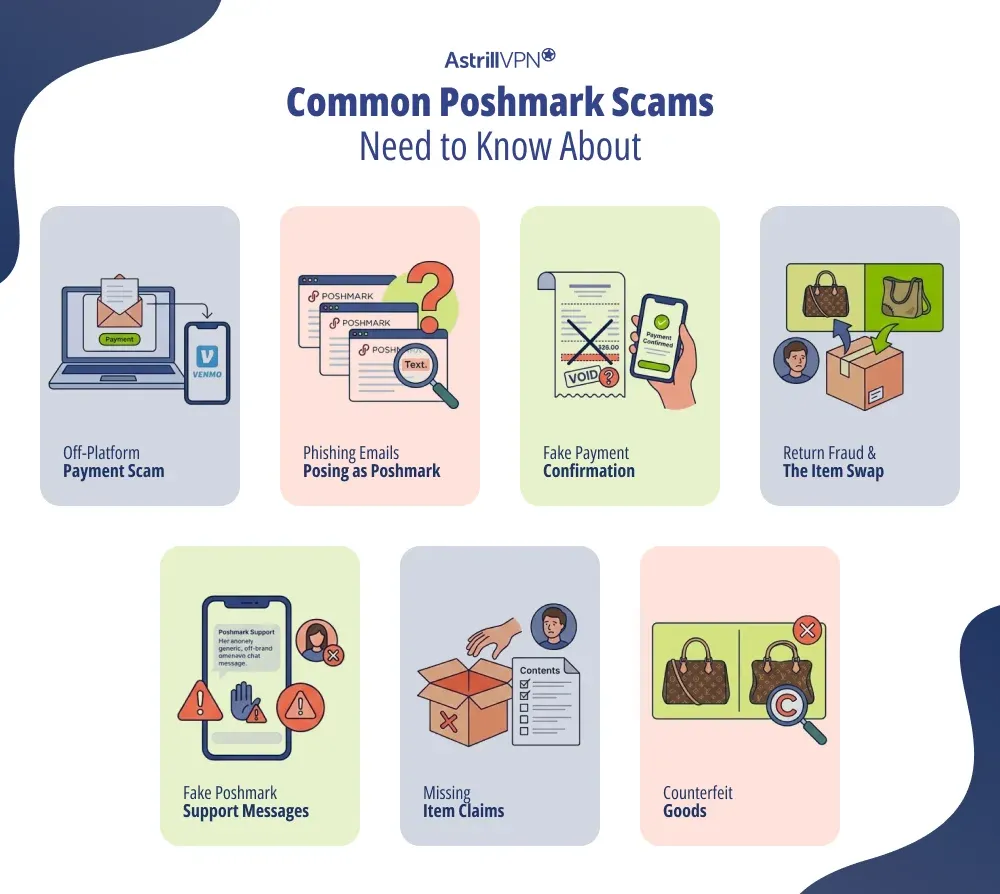
Off-Platform Payment Scam
A buyer suggests completing the transaction outside Poshmark to avoid the 20% commission. They might offer Venmo, Zelle, or PayPal Friends and Family. The pitch sounds practical, especially on a larger purchase.
The moment you leave the platform, all protections disappear. Posh Protect only covers on-platform transactions. If the buyer ghosts you or disputes the payment, you have no recourse through Poshmark, and with Zelle or Venmo Friends and Family, you often can’t dispute it through your bank either. Stay on the platform, every single time.
Phishing Emails Posing as Poshmark
Scammers send emails that look like official Poshmark communications, often creating urgency around an account issue or a suspicious transaction. The link leads to a convincing fake login page. Enter your credentials, and they have your account.
Real Poshmark emails always come from addresses ending in @poshmark.com. When in doubt, go directly to the app rather than clicking any link. Suspected phishing can be reported to phishing@poshmark.com.
This is also a good moment to mention the public Wi-Fi risk. Browsing or logging in to Poshmark on an open network exposes your session data to anyone on the same network. Using a VPN like AstrillVPN encrypts your traffic end-to-end, so your login credentials and payment details stay private even on networks you don’t control.
Fake Payment Confirmation
A buyer sends a screenshot claiming payment has been made and asks you to ship right away. The screenshot can look convincing. The money was never actually sent through Poshmark.
One rule eliminates this scam entirely: never ship anything until you can verify the payment inside the Poshmark app. A screenshot is not confirmation. Check your account balance in the app before you package a single item.
Return Fraud and the Item Swap
A buyer receives your item, then opens a return case claiming it’s not as described or arrived damaged. The scam is in what gets sent back: a different item, a damaged version, or a counterfeit. You lose both the sale and your original product.
The defense is documentation. Photograph everything before shipping, including labels, serial numbers, and any unique identifiers. Video of the packing process is even better for high-value items. That evidence is your best defense if a dispute arises.
Missing Item Claims
A buyer purchases a bundle from your closet, then claims one or more pieces never arrived. Since everything shipped together, it’s difficult to prove exactly what was in the package. The scammer keeps everything while getting a partial refund for the items they claim were missing.
Photograph every item in a bundle next to the shipping label before sealing the box. It takes two minutes and can save you from a very frustrating dispute.
Counterfeit Goods
This one runs in both directions. A seller lists a fake designer item priced just under $500, the exact threshold at which Poshmark’s authentication kicks in. Or a buyer sends back a counterfeit version of the authentic item you shipped, keeping your real one.
For buyers: any luxury item priced just under $500 deserves extra scrutiny. That pricing isn’t accidental. If the deal looks too good for a high-end piece, there’s usually a reason.
Fake Poshmark Support Messages
Scammers pose as Poshmark support staff in comments or via links, claiming there’s a problem with your transaction and directing you to click a link. Those links lead to phishing pages or malware downloads.
Poshmark support does not communicate through listing comments. If someone in the comments is claiming to be Poshmark staff, that’s an immediate red flag.
Why Scammers Target Poshmark
Poshmark’s structure creates a few vulnerabilities worth understanding. Knowing them makes it easier to spot when someone’s trying to exploit them.
The 20% Commission Problem
Poshmark’s 20% seller fee gives scammers a built-in pitch. Suggesting an off-platform deal to “save” on fees sounds reasonable. Most users know commissions are real and painful, so the offer doesn’t sound suspicious right away. That’s exactly the point.
No Private Messaging
Poshmark doesn’t have private messaging. All communication happens through public listing comments. Scammers use this as motivation to move conversations off-platform as quickly as possible, where there’s no paper trail and Poshmark’s protections no longer apply.
Easy Account Creation
Creating a Poshmark account requires no identity verification at signup. That makes it simple for bad actors to spin up new accounts after previous ones are flagged. Some verification is required for larger purchases or account changes, but the initial barrier is low enough that determined scammers can work around it.
The Authentication Gap
Poshmark only authenticates items valued at $500 or more. Everything below that threshold relies on the seller’s honesty and the buyer’s judgment. Scammers selling counterfeit goods know exactly where that line sits.
How to Tell If a Poshmark Buyer Is Legit
Sellers ask this question constantly, and there are real signals to look for. Knowing how to tell if a Poshmark buyer is legit comes down to reading a few consistent patterns.
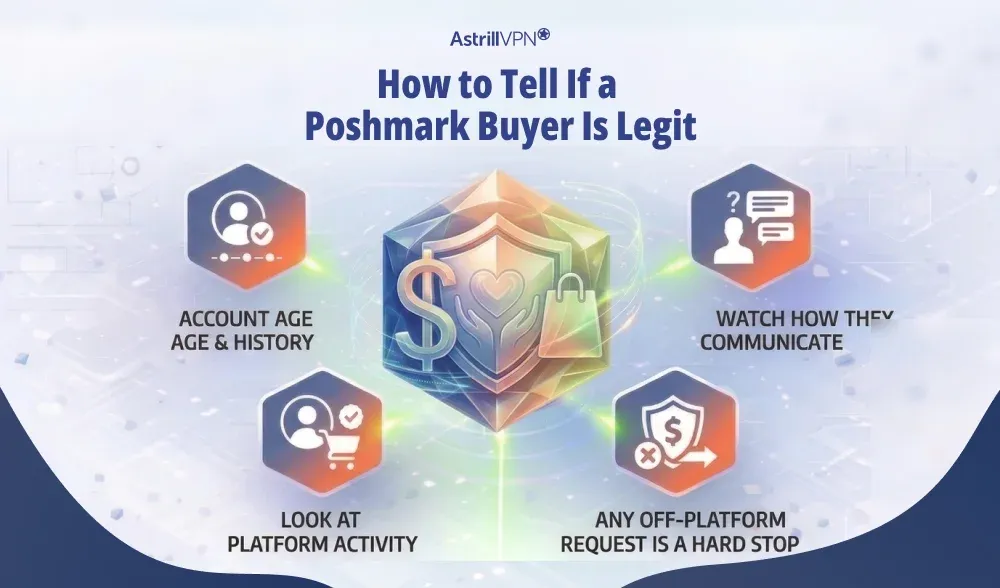
Check the Account Age and History
A brand-new account with zero sales history, no profile photo, and a generic username is worth pausing on, especially if they’re trying to complete a large purchase immediately. Scammers often create single-use accounts, run fraudulent transactions, and then disappear. Not every new account is a scammer, but it’s a data point worth weighing.
Look at Platform Activity
Legitimate buyers usually have a history, even if they’re primarily buyers rather than sellers. Love notes from previous sellers, prior purchases visible on their profile, or some time on the platform add credibility. An account created yesterday with no activity at all is a different story.
Watch How They Communicate
Poor grammar, urgent pressure to ship quickly, unusually generous offers, or requests to move the conversation off Poshmark are all warning signs. Scammers rely on urgency to push sellers past their instincts. If something feels off, it usually is.
Any Off-Platform Request Is a Hard Stop
If a buyer asks you to contact them via email or any messaging app outside Poshmark, the answer is no. Poshmark has no private messaging, and moving off-platform removes the paper trail and disqualifies you from any protections. That request, in itself, is a red flag.
Is Poshmark Authentic When It Comes to Luxury Items?
The authenticity question matters most for designers and luxury goods, and that’s exactly where Poshmark’s protections are strongest, and weakest, depending on the price.
For items over $500, Poshmark’s authentication service is a genuine safeguard. Eligible purchases are reviewed by Poshmark’s team before being shipped to the buyer. It meaningfully reduces the risk of receiving a counterfeit at that price point.
Below $500, you’re largely relying on seller honesty and your own eye. For luxury goods in that range, research what authentic versions look like before purchasing. Check for inconsistencies in photos, ask pointed questions about the item’s provenance, and read the seller’s reviews carefully. If any doubt remains after purchase, open a case immediately and include photos. If Poshmark approves the claim, you’ll receive a return label and refund.
A seller’s history matters here more than anywhere else. Someone with hundreds of completed transactions and consistently positive feedback is a much safer bet for a high-value purchase than a sparse account listing a “100% authentic” Chanel bag at an unusual price.
Tips to Stay Safe as a Buyer
Stay on the Platform
Never communicate or pay outside of Poshmark. Once you move to Venmo, Zelle, or any external app, Posh Protect no longer applies. There are no exceptions to this rule worth making.
Read Listings Critically
Vague descriptions, stock photos instead of actual item photos, or descriptions that don’t match the images are red flags. Legitimate sellers typically provide multiple clear photos, accurate measurements, and honest notes about any flaws.
Research the Seller Before You Buy
How long have they been on Poshmark? How many completed sales? What do their love notes say? A seller with hundreds of transactions and consistent positive feedback is a very different risk profile from a brand-new account.
Act Within the Three-Day Window
If something is wrong with your order, open a case immediately. After three days, the payment is released automatically, and the sale is final. Poshmark cannot step in after that window closes.
Use a VPN on Public Networks
Shopping on Poshmark from hotel Wi-Fi or a coffee shop network is riskier than it looks. Open networks are common targets for packet sniffing and session hijacking. AstrillVPN encrypts your connection before it leaves your device, keeping your payment details and login credentials private regardless of the network you’re on.
Tips to Stay Safe as a Seller
Document Everything Before You Ship
Photograph items from multiple angles, capture labels and serial numbers, and take a final photo of the packaged item with the shipping label visible. For high-value pieces, a short video of the packing process is even better.
Always Use Poshmark’s Shipping Label
This is your coverage for lost packages and your proof of shipment. Using outside shipping methods voids your protections. Don’t skip it to save on postage.
Verify Payment in the App Before Shipping
A screenshot from a buyer claiming payment was made is not confirmation. Open the Poshmark app and verify the sale yourself before you package anything.
Be Alert to Red-Flag Buyer Profiles
A brand-new account placing a large order immediately warrants extra documentation and a closer look. It doesn’t mean you should refuse, but it does mean you should be thorough before shipping.
Use Posh Authenticate for High-Value Listings
For items worth more than $500, submitting for Posh Authenticate adds credibility to your listing and protects you if a buyer later tries to claim the item was fake.
What to Do If You Get Scammed
If something goes wrong, moving fast is the most important thing you can do.
Buyers should go to the relevant order in the app, select Problems / Order Inquiry, choose the reason, and upload photos of the issue. If a package never arrived, contact Poshmark support with tracking details. Posh Protect covers packages lost in transit when the Poshmark label was used. The three-day window after delivery is your deadline, full stop.
Sellers who suspect buyer fraud should respond to any open case with documentation and report the user through their profile’s Action Menu. Reporting doesn’t guarantee reimbursement, but it protects other sellers.
If money was left in your bank account through an off-platform scam, contact your bank immediately. Zelle and Venmo Friends and Family transactions are irreversible, which is exactly why scammers prefer them. Card-based disputes are your best option.
For high-value fraud, filing a report with the FTC at ReportFraud.ftc.gov creates an official record and can support recovery efforts.
A Note on Privacy When Using Poshmark
Most people don’t think about privacy when they’re shopping for vintage jackets. But Poshmark collects your phone number, email address, shipping address, and, in some cases, a government-issued ID for identity verification. That data lives on their servers.
Beyond what Poshmark holds, browsing or logging in on an unencrypted connection exposes your session to anyone with the right tools on the same network. It’s the kind of threat that goes unnoticed until it becomes a problem.
Using a VPN like AstrillVPN adds an extra layer of protection that works independently of Poshmark’s security measures. Your internet traffic is encrypted before it leaves your device. That means even on an unsecured Wi-Fi network, your credentials and payment details stay private. If you regularly use apps like Poshmark from public places, it’s a habit worth building.
Poshmark vs Other Resale Platforms: A Quick Safety Comparison
Poshmark isn’t the only option in the resale space, and a brief comparison puts its safety profile in context.
- eBay has a longer track record and arguably more comprehensive dispute resolution, but its sheer scale also means a wider range of scam types. eBay Money Back Guarantee is thorough, though navigating it can be more complex.
- Depop has a social commerce model similar to Poshmark and faces similar risks, including off-platform payment requests and counterfeit goods. Its buyer protection is somewhat less established.
- Facebook Marketplace and Craigslist offer essentially no built-in buyer protection, making them meaningfully riskier for high-value stranger-to-stranger transactions.
- Mercari and ThredUp are both considered safe, with ThredUp operating more like a curated consignment model that handles authentication in-house.
Poshmark sits comfortably in the middle: better protected than Facebook Marketplace, roughly comparable to Depop and Mercari, slightly below eBay in dispute resolution depth.
Final Thoughts
Yes. Poshmark is a legitimate platform with real protections and a large, mostly honest community. Most transactions go fine. Its payment system is secure, its buyer protections are functional, and when used as designed, it’s a reasonable place to buy and sell secondhand goods.
The risks are real but manageable. Most Poshmark scams share a common thread: they require you to do something outside the platform. Stay within the app, document your transactions, and act quickly when something goes wrong. Those three habits alone eliminate most of the risk.
Whether Poshmark is safe ultimately depends on how you use it. The tools are there. Use them consistently, and the platform delivers what it promises.
FAQs
Poshmark authenticates luxury items valued over $500 before they ship to the buyer. Anything below that threshold is not verified by the platform, so authenticity depends entirely on the seller. For high-value items under $500, check the seller’s transaction history, read their love notes, and ask for detailed photos before buying.
Poshmark itself does not sell anything. Individual sellers do, and some list counterfeit goods. This is most common with designer items priced just under the $500 authentication threshold. If you receive a fake item, open a case within 3 days of delivery, including photos. If approved, you get a full refund and return label.
Common pitfalls include off-platform payment requests (like Venmo or Zelle), phishing emails, fake payment confirmations, return fraud (returning a different or damaged item), and counterfeit goods priced just below $500. Most issues arise when leaving the platform. Staying within the app minimizes these risks.
Sellers often face scams such as fake payment confirmations (buyers ask for shipping before funds clear), return fraud (buyers send back fake or damaged items), missing-item claims in bundle orders, and phishing attempts via fake Poshmark support messages. Always document everything before shipping and ensure payment is reflected in your Poshmark account, not just in a screenshot.
Poshmark collects your name, email, phone number, and shipping address during account setup. Never share your password, payment details, or social security number, as Poshmark will never ask for them via comments, email, or external links. If someone requests this information, it’s a scam.
Yes to both, with context. Poshmark scams exist on the platform the same way they exist on eBay, Depop, or any peer-to-peer marketplace. The platform itself is legitimate, but it can’t fully prevent bad actors from creating accounts. Counterfeit goods do appear, especially for designer items under the $500 authentication threshold. Poshmark’s protections work when you use them correctly: stay on the platform, report problems within three days of delivery, and document your transactions.

Secure your privacy instantly. Try AstrillVPN with zero risk.
About The Author










No comments were posted yet