


How to unblock Youtube? Quick ways to access must-watch videos

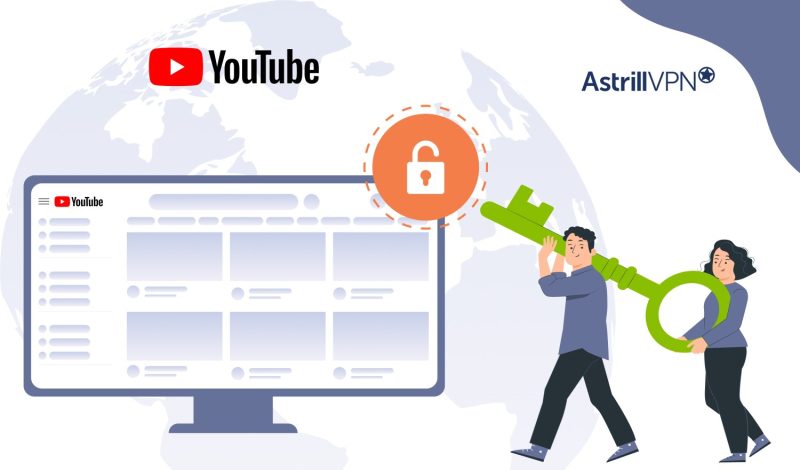
You open YouTube, find the video you want, and hit play. Instead of the video, you get a message telling you it is not available in your country, or that it has been blocked on your network. It is a frustrating stop sign, and it happens for more reasons than most people realize.
Geographic licensing restrictions, government censorship, school and workplace firewalls, ISP-level blocks, and YouTube’s own Restricted Mode can all prevent you from accessing content you should be able to watch. The good news is that each of these has a fix, and most of them do not require any technical expertise.
In this guide, we cover nine methods to unblock YouTube, including which methods work for different types of blocks, how to get YouTube working on any device, and what to do when a VPN still isn’t doing the job.
Table of Contents
Is YouTube Blocked at the Network Level or Country Level?
Before you try any workaround, it helps to know exactly why YouTube is blocked for you. The fix that works for someone in China is completely different from what works for a student on a school Wi-Fi network. There are four main scenarios, each requiring a slightly different approach.
Government or country-wide ban
YouTube is completely blocked nationwide. This is the case in countries like China, Iran, and North Korea. No amount of HTTPS tweaking will help here. You need a VPN or similar tool that can mask your traffic entirely.
ISP or DNS-level block
Your internet provider is blocking access to YouTube, either by blacklisting the domain or by filtering DNS requests. This sometimes happens in workplaces and universities. Switching your DNS settings or using a VPN will usually fix this.
Workplace or school network block
A network administrator has blocked YouTube on the local Wi-Fi or LAN. The restriction is limited to that network. Switching to mobile data or using a VPN is the quickest fix.
Geo-restricted content
YouTube itself is accessible, but a specific video or channel is unavailable in your region due to licensing or content rights. A VPN that routes your traffic through an eligible country will unblock it.
If you are not sure which one applies to you, try opening YouTube on mobile data instead of your current Wi-Fi. If it loads fine on data, the block is at the network level. If it is still inaccessible, you are likely dealing with a country-wide or ISP-level restriction.
Why YouTube Gets Blocked?
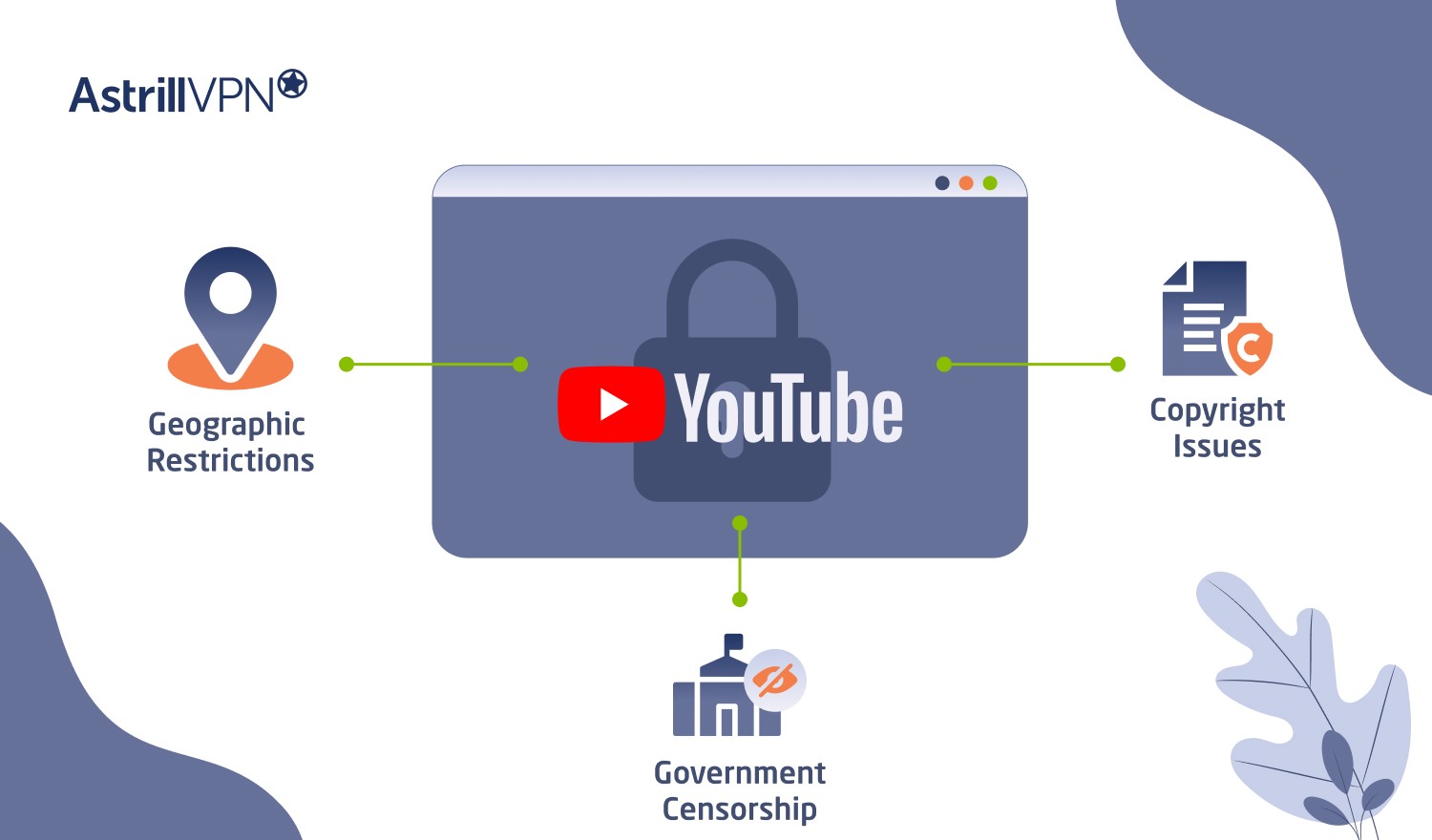
YouTube hosts a ton of great content, but not all of it is available everywhere. Media companies sometimes block videos in certain countries due to licensing issues.
Geographic Restrictions
The most common reason YouTube videos are blocked is geographic restrictions. Media companies license content to streaming services on a country-by-country basis. So a movie or TV show available in the US and Canada may not have the rights to stream it in the UK or Australia. Rather than make content available where they don’t have the licenses, YouTube just blocks those videos in restricted areas.
Copyright Issues
YouTube also blocks videos that violate copyright laws. If a media company submits a valid copyright claim against a video, YouTube will usually block it to avoid legal trouble. These types of blocks can happen anywhere, not just in specific countries. The good news is copyright claims usually only target specific videos, not entire channels. So the channel owner may be able to dispute the claim or upload a new version of the video.
Government Censorship
Some countries censor more content on YouTube than just licensing or copyright issues. Governments will pressure YouTube to block videos that criticize politicians or address sensitive topics. While YouTube does comply with these requests to keep the service available in those countries, they aim to limit censorship as much as possible. If a video violates local laws but not YouTube’s content policies, they may choose to only block it in the requesting country.
How to watch YouTube when it’s blocked?
Use a VPN
A VPN or virtual private network masks your IP address and location, allowing you to access geographically restricted content. Connect to a VPN server in a country where YouTube isn’t blocked, like the US or UK, and you’ll be able to view any video. Many paid VPN options are available, though free ones typically have data limits and unsecure. Be sure to choose a reputable service.
Try Proxy Websites
Proxy websites also disguise your IP address but are free to use. Simply enter the YouTube URL of the video you want to watch and the proxy website will load it for you. The downside is that proxy sites can be slow and unreliable. They may also log your browsing data and sell it to third parties, so use with caution.
Enable HTTPS on YouTube
This easy method sometimes works to bypass restrictions. Instead of going to youtube.com, enter https://youtube.com in your browser. The ‘S’ at the end stands for secure and encrypts your connection, which can fool some ISPs into thinking you’re accessing a different site. This doesn’t work for all countries or ISPs, but it’s worth a shot.
Download YouTube Videos In Advance
There are many free YouTube download tools that allow you to save videos to your hard drive. Then, you can watch the clips later, even without an internet connection. Look for options like 4K Video Downloader, Videoder, or YTD Video Downloader. Just be aware that downloading copyrighted content you don’t own is illegal. Only save videos that are in the public domain or that you have permission to download.
Change Your DNS Settings
Sometimes, YouTube is not blocked at the IP level but at the DNS level. Your internet provider assigns you a DNS server by default, and that server may be configured to block access to certain domains, including YouTube. Swapping it out for a public DNS server can get around this.
Google DNS (8.8.8.8) and Cloudflare DNS (1.1.1.1) are the most widely used options. Here is how to change your DNS on Windows:
- Open the Start menu and go to Settings > Network and Internet.
- Click on your active connection and select “Edit DNS settings.”
- Switch from “Automatic” to “Manual” and enter 1.1.1.1 as the preferred DNS and 1.0.0.1 as the alternate.
- Save the settings, restart your browser, and try YouTube again.
On a Mac, go to System Settings > Network, select your connection, click DNS, and add the same addresses. On Android, go to Settings > Network > Private DNS and enter 1.1.1.1.
Keep in mind that changing DNS only bypasses DNS-level blocks. It does not encrypt your traffic or hide your IP address, so it will not work against deeper network restrictions or country-wide bans. For those, you need a VPN.
Use the Tor Browser
The Tor browser routes your connection through a network of volunteer-operated servers around the world before it reaches YouTube. Each server only knows the one before and after it, which makes it extremely difficult for anyone to trace the traffic back to you. It is free, open-source, and requires no account or subscription.
The catch is speed. Because your data is bouncing through multiple relays, video streaming on Tor is noticeably slow. Buffering is common, and anything above standard definition will likely be a frustrating experience. Tor is best suited for bypassing censorship when getting a VPN is difficult, not for regular YouTube use.
If you want to try it, download the Tor browser from the official Tor Project website at torproject.org. Once installed, just open it and navigate to YouTube as you normally would. No extra configuration is needed.
Switch to a Mobile Hotspot
If YouTube is blocked on your school or workplace Wi-Fi, the simplest fix might be to stop using that network altogether. Your phone’s mobile data connection is completely independent from the local network, so any blocks put in place by the administrator simply do not apply.
On iPhone, go to Settings > Personal Hotspot and toggle it on. On Android, go to Settings > Network > Hotspot and tethering, then enable mobile hotspot. Connect your laptop or another device to it like you would any Wi-Fi network, and YouTube should load without any issues.
The obvious limitation is data usage. YouTube at standard definition uses roughly 700MB per hour. At 1080p, that climbs to around 3GB. If you are on a limited data plan, use this method selectively. It also will not help if the block is at the country or ISP level rather than at the local network level.
Try the Google Translate Trick
This one sounds strange, but it can work for basic network-level blocks. Google Translate loads web pages from its own servers to translate them, which means it can sometimes act as a makeshift proxy. The network filter sees traffic going to Google, not YouTube, and lets it through.
To try it, go to translate.google.com. Paste the YouTube URL you want to access into the left field, select any language in the source menu, and choose a different language on the right. Click the translated link that appears. If the block is simple enough, you can watch the video through the translated page.
Do not expect this to work reliably. It fails against any block that goes deeper than domain filtering, and the video playback experience through Translate is often broken or missing features. Think of it as a last resort for quick access, not a proper solution. If it does not work, use a VPN instead.
Is It Legal To Unblock YouTube?
Using a VPN or proxy to bypass YouTube restrictions is a bit of a legal gray area. Technically, it violates YouTube’s terms of service, but many users do access blocked content this way without consequence. However, there are a few things to keep in mind.
Copyright Issues
Much of the content on YouTube is copyrighted, like music videos, movie trailers, and TV clips. Accessing this type of media in countries where it’s restricted can be considered copyright infringement. YouTube’s content owners can request that certain videos be blocked in specific locations, and bypassing these blocks may violate their distribution rights.
Government Censorship
Some countries block access to YouTube and other sites for political or cultural reasons. Circumventing government censorship is illegal in many places and can have serious legal consequences if caught. If you live in a country with internet censorship, accessing restricted content puts you at risk.
YouTube Community Guidelines
YouTube has strict policies against hate speech, violence, spam, and other objectionable content. Although rare, accessing restricted videos could expose you to content that violates YouTube’s community guidelines and terms of service. Use caution, especially if allowing children to access YouTube through a proxy or VPN.
How to Unblock YouTube using AstrillVPN?
With AstrillVPN, you can easily access YouTube from anywhere. Once you’ve installed the AstrillVPN app on your device, here’s how to get started:
- Log into your AstrillVPN account.
- Select a server location where YouTube isn’t blocked, like the US or UK.
- Connect to that server and your IP address will appear to be in that location.
- Your device’s IP address acts like a return address for data sent over the internet. By masking your IP address with AstrillVPN, websites will think you’re accessing them from the location of the VPN server.
- YouTube will work just like normal.
AstrillVPN also encrypts all of your internet traffic to hide your online activities from prying eyes. So not only can you access YouTube, but you can do so privately and securely.
To connect to an AstrillVPN server:
- Open the AstrillVPN app on your device.
- Tap the ‘Country Selection’ button to see a list of available server locations.
- Choose a location where YouTube is not blocked, like the US or UK.
- Tap the ”On’ button. The app will connect to the VPN server.
- Once connected, the button will say ‘Connected’.
- Open the YouTube app or website. Videos should now play normally without any geo-restrictions.
If YouTube is still blocked, try connecting to a different server location. AstrillVPN offers servers in over 58 countries so you have many options to choose from.
Unblock YouTube Now – Get a US VPN
Why Is YouTube Still Blocked Even With a VPN?
If you are connected to a VPN, but YouTube is still blocked or a video is still showing as unavailable, something else is getting in the way. Here are the most common reasons and how to fix each one.
You connected to the wrong server location
This is the most common culprit. If a video is geo-restricted to users in the US, you need to connect to a US server specifically. A server in Germany or Singapore will not help. Disconnect, select a server in the correct country, and try again.
Your browser has cached your real location
Browsers store location data from previous sessions. Even after connecting to a VPN, YouTube may still see your original location from a stored cookie or cache entry. Clear your browser cookies and cache, then refresh YouTube. In Chrome, go to Settings > Privacy and Security > Clear browsing data and check “Cookies and other site data” and “Cached images and files.”
You have a DNS leak
A DNS leak means that despite your VPN being connected, your device is still sending DNS requests through your regular internet provider. YouTube can use these to detect your real location. To check, visit dnsleaktest.com while connected to your VPN. If you see your actual ISP listed in the results, your VPN has a DNS leak. AstrillVPN routes DNS through its own servers by default, which prevents this.
A WebRTC leak is revealing your IP address
WebRTC is a browser technology that some websites use for real-time communication. It can sometimes expose your real IP address even when a VPN is active. You can test for this at browserleaks.com/webrtc. If a leak is detected, install a WebRTC-blocking browser extension or disable WebRTC in your browser settings.
The VPN server’s IP has been flagged
When many users share the same VPN server IP, YouTube may eventually flag or rate-limit that address. If YouTube loads slowly or returns errors, switch to a different server within the same country. AstrillVPN offers multiple server options per location.
The content is age-restricted, not geo-restricted
A VPN will not bypass YouTube’s age gate. If a video requires you to confirm your age, you need to be signed into a YouTube account that has verified its age. This is a completely separate system from geo-blocking, and no VPN or proxy can work around it.
Chrome Extensions for Unblocked YouTube Access
If you use Chrome, you’ll be happy to know there are several extensions that can help bypass YouTube restrictions. Here are a few of the top options:
UltraSurf
This popular extension establishes an encrypted connection that hides your IP address and location to circumvent censorship. Once installed, simply turn it on when you want to access YouTube and other blocked sites. UltraSurf is free, though you’ll have to disable any ad blockers you use since it generates revenue from ads.
ProxFlow
ProxFlow is a Chrome extension that allows you to access blocked content by routing your connection through a proxy. It can help you bypass restrictions on YouTube without using a VPN.
Unblock Youku
While primarily designed for unblocking Youku (a Chinese video service), this Chrome extension can sometimes assist in accessing blocked YouTube videos by bypassing regional restrictions.
Of course, the specific extensions available may vary in your country depending on local laws.
Why are some YouTube videos banned or unavailable in my country?
Countries have different laws about what types of content can be accessed online. So YouTube has to restrict certain videos in some places to follow these local laws.
Content restrictions
In some countries, YouTube may block or restrict videos that show things like extreme violence, nudity, or other mature content. They may also block videos that violate laws around hate speech, privacy, or copyright.
Government censorship
Some governments restrict access to videos they consider politically sensitive or threatening. They pressure YouTube and other sites to block content that’s critical of the government or exposes human rights issues.
Licensing issues
YouTube has to restrict some videos in certain countries because they don’t have the rights to show that content in that region. Music videos, TV clips, and movies are often limited to specific countries based on licensing deals with content creators.
The restrictions placed on YouTube vary widely around the world based on a country’s laws and culture. If a video isn’t available where you are, it’s usually for one of these reasons – though the specific details can be murky.
How to Unblock YouTube Restricted Mode
Restricted Mode is a YouTube feature that filters out content flagged as potentially mature, including videos that contain strong language, violence, or adult themes. It is designed for use in schools, libraries, and similar environments. If Restricted Mode is on, you will notice that certain videos are hidden or unavailable, and comments may be disabled across the board.
The fix depends on who turned it on and how.
If You Turned It On Yourself
This is the simplest case. Go to youtube.com, click your profile picture in the top right corner, and scroll down to the bottom of the menu. You will see “Restricted Mode” listed there. If it is on, click it to toggle it off. The change takes effect immediately.
If a Network Administrator Locked It
Schools and workplaces can enable Restricted Mode at the DNS level across an entire network. When this is the case, the toggle in your YouTube settings will appear grayed out, and you will see a message saying it has been enabled by your network. You cannot turn it off from within YouTube.
Using a VPN can bypass this. Because the VPN routes your DNS requests through its own servers rather than the network’s, the administrator’s DNS-based Restricted Mode setting no longer applies to your traffic. Connect to any AstrillVPN server and reload YouTube. The toggle should be editable again.
If It Is Locked at the Device or Account Level
Restricted Mode can also be enabled through Google’s Family Link parental controls. If your account is managed under Family Link, a parent or guardian has set the restriction at the account level, and a VPN will not change that. The lock is tied to your Google account, not your network. You would need the account manager to adjust the settings in the Family Link app.
Similarly, if a school has enrolled your device in a mobile device management system, Restricted Mode may be enforced at the device level. In that case, the restriction applies regardless of which network you are on, and a VPN cannot override it.
A quick way to check which type of lock you are dealing with: open YouTube in a private or incognito window while connected to your VPN. If Restricted Mode is off in incognito, the lock is DNS-based and a VPN resolves it. If it is still on, the lock is at the account or device level.
How to Unblock YouTube on Specific Devices
The method you use to unblock YouTube can vary depending on the device you are on. Here is a quick breakdown by device type.
On iPhone and Android
Download the AstrillVPN app from the App Store or Google Play. Open it, sign in, and connect to a server in a country where YouTube is accessible. Once connected, open the YouTube app or go to youtube.com in your browser. The VPN works system-wide, so both the app and the browser will be unblocked.
If you are on a school or work network, switching to mobile data is also a quick option. Go to your phone settings, disable Wi-Fi, and connect through your carrier’s data network instead.
On a School Chromebook
Chromebooks used in schools are often managed by an administrator who may block VPN extensions and limit what can be installed. If the device is managed and locked down, your options are limited on the device itself.
The most reliable workaround is to connect through a mobile hotspot. Turn on your phone’s hotspot, disconnect the Chromebook from the school Wi-Fi, and connect to your hotspot instead. Because you are no longer on the school network, the network-level blocks no longer apply.
If the Chromebook allows extensions, you can try installing the AstrillVPN Chrome extension from the Chrome Web Store. This routes browser traffic through a VPN server without needing a full app install.
On a Smart TV
Most smart TVs do not support VPN apps directly. There are two ways to get around this.
The first option is to set up AstrillVPN on your router. When the VPN runs at the router level, every device connected to that router is automatically protected, including your TV. Check the AstrillVPN router setup guide for step-by-step instructions for your router model.
The second option is to use SmartDNS. AstrillVPN includes SmartDNS support, which you can configure directly in your TV’s network settings. Go to your TV’s network or DNS settings, enter the SmartDNS server address from your AstrillVPN account dashboard, and restart the TV. This is faster to set up than the router method and works well specifically for unblocking streaming content.
At the Router Level
Setting up AstrillVPN on your router is the most comprehensive solution. Once configured, every device on your home network uses the VPN automatically. You do not need to install anything on individual devices, and it covers smart TVs, consoles, and any other device that connects to your Wi-Fi.
AstrillVPN supports router setup on most major firmware types, including DD-WRT, Tomato, and AsusWRT. The setup process involves logging into your router’s admin panel and entering your VPN credentials along with the server details. Full guides for each firmware type are available on the AstrillVPN website.
Countries where YouTube is banned
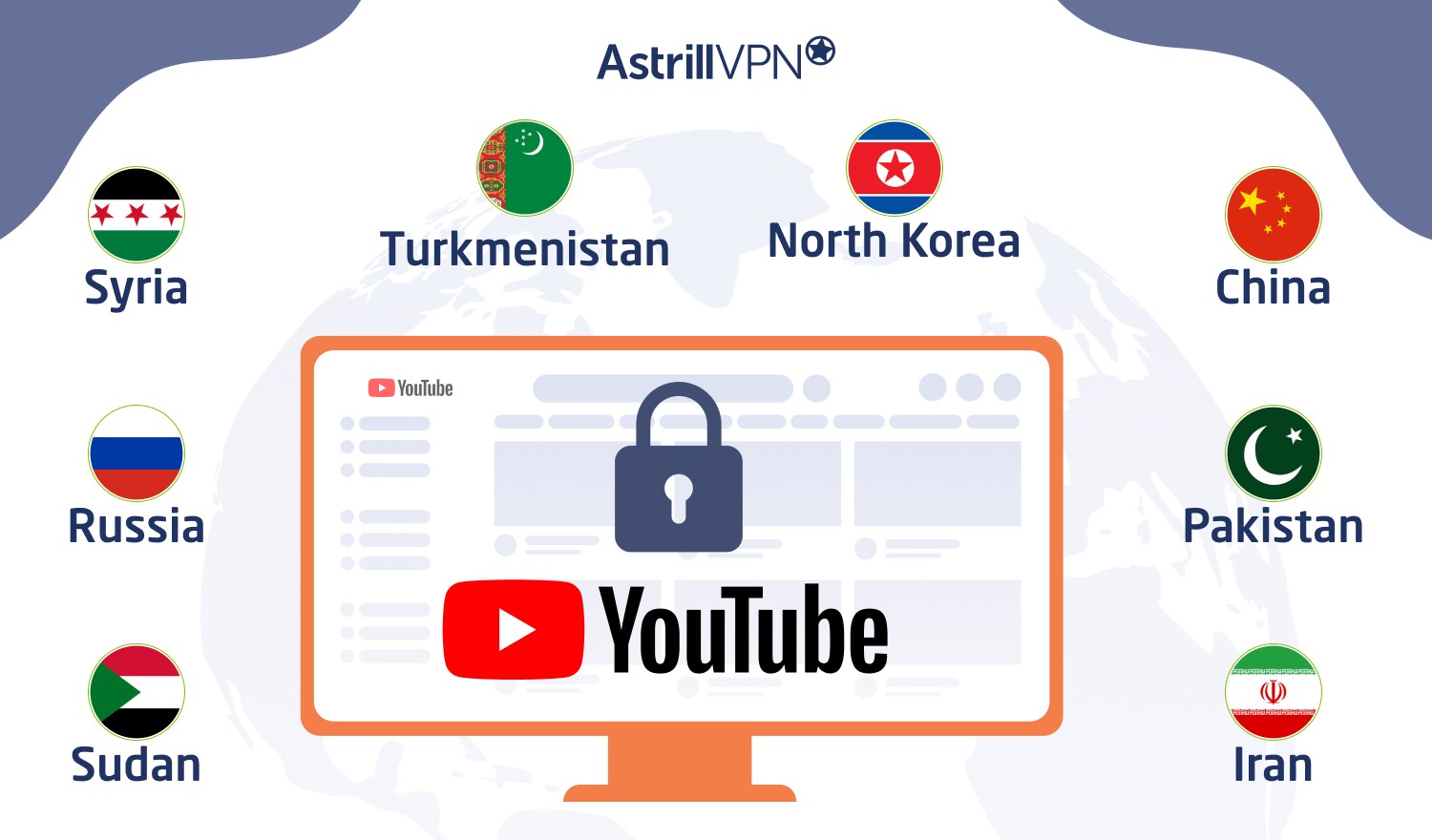
If you live in China, Iran, Turkmenistan, Uzbekistan, Tajikistan, Egypt, or South Korea, YouTube is blocked in your country due to government restrictions.
China
In China, YouTube has been banned since 2009. The Chinese government blocks most major social media and video sharing sites. Instead, citizens use government-approved alternatives like Youku, Tudou, and Xunlei. To access YouTube, you’ll need to use a VPN or proxy service to mask your IP address.
Iran
Iran banned YouTube in 2012 after protests over an anti-Islam film posted on the site. The Iranian government restricts access to many Western social networks and media outlets. To view YouTube, Iranians rely on VPNs and other circumvention tools to bypass internet censorship.
Turkmenistan, Uzbekistan and Tajikistan
These former Soviet republics in Central Asia have banned YouTube, along with most other foreign social media sites. Their authoritarian governments restrict internet use and censor information from the outside world. VPNs are the only option for residents to access YouTube and other blocked content.
The good news is VPNs and proxy servers can help you get around these bans and unblock YouTube so you have access to videos on any topic that interests you. Just be cautious, as some governments may penalize citizens for circumventing censorship.
North Korea
North Korea blocks nearly all foreign websites, including YouTube. The authoritarian regime tightly controls the internet and media within the country.
Pakistan
Pakistan has blocked YouTube on multiple occasions, though access is currently available. In 2012, Pakistan blocked YouTube for over a year due to a controversial anti-Islam video. Access was restored in 2016 but has been temporarily blocked a few times since.
Sudan
Sudan blocked access to YouTube in 2017 over an anti-Islam film. The ban was lifted in 2019 but remains subject to potential future restrictions.
Syria
Syria blocked YouTube in 2007 and it remains banned under President Bashar al-Assad’s authoritarian regime. Access to most foreign websites is restricted in Syria.
Russia
Though not a complete ban, Russian authorities have blocked specific YouTube channels in recent years, mainly those belonging to political opposition. However, YouTube remains widely available and used in Russia. The Kremlin prefers to restrict access to individual channels rather than ban entire platforms.
FAQs
Here are some commonly asked questions about unblocking YouTube:
Free proxy and VPN services typically come with privacy and security risks. Your data and activity may be visible to the companies providing these services. Be cautious and do some research on any service before using it.
The easiest way is to use a proxy or VPN to mask your IP address and spoof your location. Connect to a server in the country where YouTube isn’t blocked and you’ll be able to access content as if you were actually there. Many free proxy and VPN services offer servers in the U.S., U.K., Canada and other locations.
Yes, free VPN services can be used to unblock YouTube by routing your traffic through an IP address in a different country. However, free VPNs often have data caps, slower speeds and less reliability. They may also have privacy issues since they collect and sell your data to fund the service. Paid VPN options like AstrillVPN provide faster, uncapped access and strict no-logging policies.
The YouTube TV streaming service is only available in the U.S. To access it outside the country, you’ll need to use a VPN to mask your location. Connect to a U.S.-based VPN server and you’ll be able to sign in to YouTube TV and stream content as usual. AstrillVPN is specifically optimized for streaming, with fast speeds and unlimited bandwidth.
Conclusion
With a few simple tricks, you can gain access to videos that were previously blocked on YouTube. Whether you use a VPN, proxy server, or DNS service, you now have the power to view content that was restricted. Just remember to be responsible as some videos are blocked for good reason. But for the most part, you should now be able to indulge your curiosity and access a wider selection of videos. Enjoy your newfound YouTube freedom and start watching all those videos you’ve been missing out on.
Secure your privacy instantly. Try AstrillVPN with zero risk.
About The Author




No comments were posted yet