




Crypto Security in 2026: How to Protect Your Cryptocurrency from Hackers?

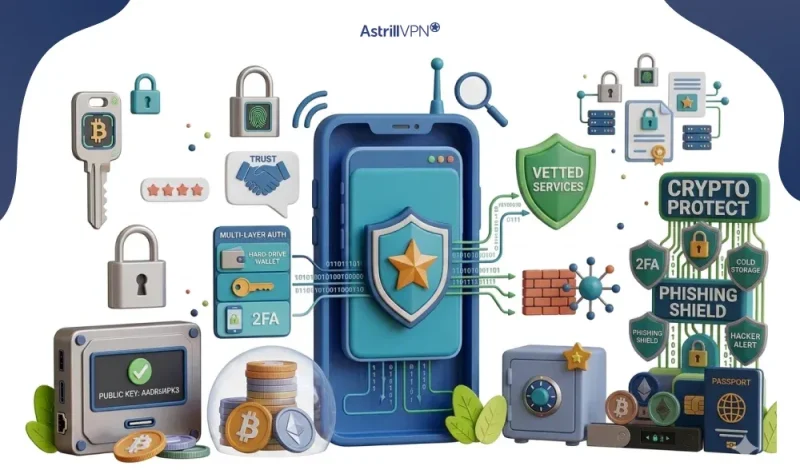
As cryptocurrency adoption continues to grow worldwide, so do the risks associated with it. With billions of dollars stored in digital assets, cybercriminals are constantly finding new ways to exploit vulnerabilities in crypto systems. From exchange hacks to phishing scams, the need for strong crypto security has never been more critical.
In 2025 alone, crypto-related cyberattacks resulted in losses exceeding $3.8 billion globally, highlighting the urgent need for better protection strategies. Whether you’re a beginner or an experienced investor, understanding cryptocurrency security is essential to safeguarding your assets.
Table of Contents
What Is Crypto Security?
Crypto security refers to the measures, tools, and practices used to protect cryptocurrencies, blockchain networks, and digital wallets from cyber threats. It combines cybersecurity principles with blockchain technology to ensure secure transactions, storage, and access.
Crypto security focuses on:
- Protecting private keys
- Securing wallets and exchanges
- Preventing unauthorized access
- Detecting malicious activities
Understanding Cryptocurrency Security
Cryptocurrency security is built on advanced cryptographic techniques that ensure transactions are secure, transparent, and tamper-resistant. Unlike traditional banking systems, crypto relies on decentralized networks rather than central authorities.
Key Components of Cryptocurrency Security
- Private Keys: Secret codes that give access to your funds
- Public Keys: Used to receive cryptocurrency
- Wallets: Software or hardware used to store digital assets
- Blockchain: A distributed ledger that records transactions
Crypto Cybersecurity: Why It Matters?
As cryptocurrencies like Bitcoin and Ethereum continue to grow in popularity, so do the risks associated with them. Unlike traditional banking systems, crypto operates on decentralized networks powered by Blockchain, which offers transparency and security, but also introduces new cybersecurity challenges. This makes crypto cybersecurity more critical than ever.
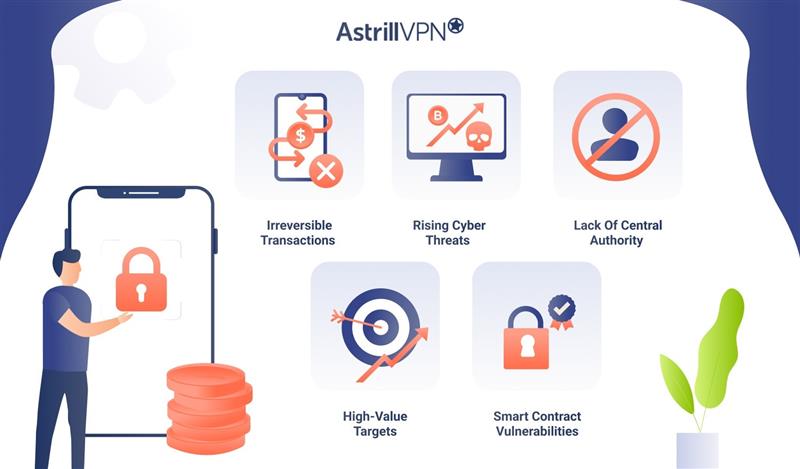
1. Irreversible Transactions
Cryptocurrency transactions are permanent. Once a transaction is confirmed on the blockchain, it cannot be reversed. If funds are stolen due to hacking or fraud, recovery is nearly impossible.
2. Rising Cyber Threats
Crypto platforms are prime targets for hackers. Attacks such as phishing, malware, and exchange breaches are increasing every year. Cybercriminals exploit weak security systems to gain access to funds.
3. Lack of Central Authority
Unlike banks, cryptocurrencies are decentralized. There is no central authority to intervene, reverse transactions, or compensate losses. Users are fully responsible for their own security.
4. High-Value Targets
Crypto wallets often hold significant value, making them attractive targets for attackers. Even a single compromised wallet can result in massive financial losses.
5. Smart Contract Vulnerabilities
Smart contracts and self-executing programs on the blockchain can contain bugs. Hackers exploit these flaws to drain funds or manipulate transactions.
Important Stats (2025–2026)
These numbers show that even though blockchain technology is secure, users and platforms remain vulnerable.
- Over $1.7 billion was stolen from DeFi platforms in 2026
- Phishing attacks increased by 40%, targeting crypto users
- More than 60% of crypto thefts involved compromised private keys
- Crypto scams affected over 10 million users globally
Is Bitcoin Safe from Hackers?
Bitcoin itself is highly secure, thanks to its decentralized blockchain and strong cryptography. The network has never been hacked at its core. However, that doesn’t mean your Bitcoin is completely safe. While Bitcoin’s technology is secure, user behavior and platform vulnerabilities are the real risks.
Where the Risks Exist?
- Crypto exchanges are getting hacked.
- Weak passwords or no two-factor authentication
- Phishing scams and fake websites
- Malware targeting wallets
How to Protect Crypto from Hackers?
Protecting your cryptocurrency requires a combination of tools, awareness, and best practices.
Use a Hardware Wallet for Secure Storage
One of the safest ways to protect your cryptocurrency is by storing it in a hardware wallet. Unlike online wallets, hardware wallets keep your private keys offline, making them far less vulnerable to hacking attempts. Popular options like Ledger Nano X and Trezor Model T provide strong encryption and require physical confirmation for transactions, adding an extra layer of security.
Enable Two-Factor Authentication (2FA)
Two-factor authentication adds an extra layer of security between hackers and your crypto accounts. Even if someone gains access to your password, they would still need a second verification code from an app like Google Authenticator or Authy. This significantly reduces the risk of unauthorized access, especially on exchanges and wallets.
Keep Your Private Keys Safe
Your private keys are the most critical element of crypto security. If someone gains access to them, they can control your funds completely. Never share your private keys with anyone and avoid storing them online. Instead, keep them written down in a secure physical location or stored in encrypted offline storage.
Beware of Phishing Attacks
Phishing scams are one of the most common ways hackers steal crypto. Attackers create fake websites and send emails that mimic legitimate platforms to trick users into revealing login credentials or private keys. Always double-check URLs, avoid clicking suspicious links, and only access exchanges through official websites.
Use Strong and Unique Passwords
Weak or reused passwords make it easier for hackers to compromise your accounts. Always use long, complex passwords that include a mix of letters, numbers, and symbols. Using a password manager can help generate and store secure passwords for different platforms.
Avoid Public Wi-Fi for Transactions
Public Wi-Fi networks are often unsecured and can be exploited by hackers to intercept your data. Avoid accessing your crypto accounts or making transactions while connected to public networks. If necessary, use a trusted VPN service like Astrill to encrypt your internet connection.
Keep Software and Devices Updated
Outdated software can contain security vulnerabilities that hackers exploit. Regularly update your wallet apps, operating systems, and antivirus software to ensure you have the latest security patches and protections.
Use Reputable Exchanges and Platforms
Not all crypto platforms are equally secure. Choose well-established and trusted exchanges with strong security measures, insurance policies, and a proven track record. Research the platform’s history and user reviews before storing or trading your funds there.
Diversify Storage Methods
Avoid keeping all your crypto in one place. Spread your assets across multiple wallets to reduce the risk of losing everything in a single attack. For example, you can keep a portion in a hardware wallet and another portion in a secure exchange account.
Monitor Your Accounts Regularly
Regularly checking your accounts helps you detect suspicious activity early. Enable transaction alerts and notifications so you are immediately informed of any unauthorized actions. Quick detection can help you take action before significant damage occurs.
Blockchain Cybersecurity
Blockchain cybersecurity focuses on protecting blockchain networks, smart contracts, and decentralized applications (dApps).
How Blockchain Enhances Security?
Blockchain enhances security in the following ways.
Decentralization Eliminates Single Points of Failure
One of the biggest security advantages of Blockchain is its decentralized nature. Instead of storing data on a single server, blockchain distributes information across a network of nodes. This makes it extremely difficult for hackers to attack the system, as they would need to compromise a majority of the network simultaneously rather than a single vulnerable point.
Cryptographic Encryption Protects Data
Blockchain uses advanced cryptographic techniques to secure transactions and data. Each transaction is encrypted and linked to the previous one, forming a secure chain. Public and private key cryptography ensures that only authorized users can transfer assets, making unauthorized access highly unlikely.
Immutability Prevents Data Tampering
Once data is recorded on a blockchain, it cannot be altered. This property, known as immutability, ensures that transaction records remain permanent and tamper-proof. Any attempt to modify data would require altering all subsequent blocks, which is practically impossible in a well-secured network.
Consensus Mechanisms Ensure Trust
Blockchain networks rely on consensus mechanisms such as Proof of Work and Proof of Stake to validate transactions. These mechanisms require network participants to agree on the legitimacy of transactions before they are added to the blockchain, thereby preventing fraud and ensuring trust without a central authority.
Transparency Increases Accountability
All transactions on a blockchain are recorded on a public ledger that participants can view. This transparency makes it easier to track activities and detect suspicious behavior. While user identities remain pseudonymous, transaction visibility enhances accountability across the network.
Distributed Ledger Enhances Data Integrity
Because every node in the network maintains a copy of the ledger, data consistency is continuously verified. If a discrepancy occurs, the network automatically identifies and corrects it using consensus rules. This redundancy ensures high data integrity and resilience against corruption.
Smart Contracts Automate Secure Transactions
Smart contracts are self-executing programs that run on the blockchain and enforce predefined rules. They eliminate the need for intermediaries and reduce the risk of human error. Once deployed, smart contracts execute exactly as programmed, ensuring secure and reliable transactions.
Resistance to Cyber Attacks
The combination of decentralization, encryption, and consensus mechanisms makes blockchain highly resistant to common cyber threats such as hacking, data breaches, and fraud. While no system is completely immune, blockchain significantly raises the difficulty and cost of attacks.
Challenges in Blockchain Security
Several challenges in blockchain security can jeopardize privacy.
51% Attacks and Network Control
One of the most well-known risks in Blockchain is the possibility of a 51% attack. This occurs when a single entity or group gains control of the majority of the network’s computing power. With this control, attackers can manipulate transactions, double-spend coins, and block new transactions, undermining the system’s trust.
Smart Contract Vulnerabilities
Smart contracts are powerful but not immune to flaws. Attackers can exploit bugs to steal funds or disrupt operations. Several decentralized finance (DeFi) platforms have suffered losses due to smart contract vulnerabilities, underscoring the need for robust auditing and testing.
Private Key Management Issues
Blockchain security heavily depends on how users manage their private keys. Losing a private key permanently means losing access to funds, while theft of a key gives attackers full control. Since there is no central authority to recover keys, this remains one of the biggest challenges for users.
Scalability vs Security Trade-offs
As blockchain networks grow, maintaining both scalability and security becomes difficult. Increasing transaction speed and throughput can sometimes weaken decentralization, creating potential vulnerabilities that attackers may exploit.
Phishing and Social Engineering Attacks
Even though blockchain itself is secure, users are still vulnerable to phishing and social engineering attacks. Hackers often trick individuals into revealing sensitive information, such as login credentials, through fake websites, emails, and messages.
Lack of Regulation and Standardization
The decentralized nature of blockchain means there is limited regulation and standard security practices across platforms. This lack of uniformity can lead to inconsistent security measures, making some networks and applications more vulnerable than others.
Endpoint and Wallet Security Risks
While the blockchain network may be secure, the devices and wallets used to access it can be compromised. Malware, keyloggers, and insecure applications can expose sensitive data, allowing attackers to gain access to crypto assets.
Consensus Mechanism Exploits
Different consensus mechanisms, such as Proof of Work and Proof of Stake, have their own weaknesses. For example, Proof of Work can be vulnerable to mining centralization, while Proof of Stake may face issues such as the “nothing at stake” problem and validator collusion.
Quantum Computing Threats
Emerging technologies like quantum computing could break current cryptographic algorithms used in blockchain. Although this threat is still theoretical, it poses a long-term challenge that developers need to prepare for.
Energy Consumption and Resource Constraints
Some blockchain networks, especially those using Proof of Work, require massive computational power and energy. This not only raises environmental concerns but can also lead to centralization, where only entities with significant resources can participate effectively.
Common Crypto Security Risks
There are several common crypto security risks,
Phishing Attacks and Fake Websites
Phishing is one of the most widespread threats in the crypto space. Attackers create fake websites, emails, or messages that mimic legitimate platforms to trick users into revealing login credentials or private keys. Even users of popular cryptocurrencies like Bitcoin can fall victim if they unknowingly enter their details on a fraudulent site.
Exchange Hacks and Platform Breaches
Centralized crypto exchanges are frequent targets for hackers because they hold large amounts of user funds. If an exchange’s security is compromised, attackers can steal millions in digital assets. The infamous Mt. Gox Hack is a prime example of how devastating such breaches can be.
Malware and Crypto-Stealing Software
Malware is designed to infiltrate devices and steal sensitive information such as private keys and wallet credentials. Some malware can even replace wallet addresses during transactions, redirecting funds to attackers without the user noticing.
Weak Passwords and Poor Authentication
Using weak passwords makes it easier for hackers to gain access to crypto accounts. Without additional protections like multi-factor authentication, attackers can exploit stolen credentials to access wallets and exchange accounts.
Private Key Theft or Loss
Private keys are the foundation of crypto ownership. If they are stolen, attackers gain full control over the assets. If they are lost, the funds become permanently inaccessible. Since blockchain systems are decentralized, there is no recovery mechanism for lost keys.
Rug Pulls and Scam Projects
Rug pulls occur when developers create a crypto project, attract investors, and then suddenly withdraw all funds, leaving the project abandoned. These scams are common in new, unverified tokens and in decentralized finance (DeFi) platforms.
Unsecured Smart Contracts
Smart contracts automate transactions but can contain vulnerabilities if not properly coded. Hackers exploit these weaknesses to drain funds and manipulate contract behavior, especially in DeFi applications.
Public Wi-Fi and Network Attacks
Accessing crypto accounts over unsecured public Wi-Fi networks exposes users to risks such as man-in-the-middle attacks. Hackers can intercept data and potentially gain access to sensitive information.
Social Engineering Attacks
Social engineering involves manipulating individuals into revealing confidential information. Attackers may impersonate support staff, influencers, and trusted contacts to trick users into sharing passwords and private keys.
Conclusion
Crypto security is no longer optional; it’s essential. While blockchain technology provides a strong foundation, most vulnerabilities come from human error and weak security practices. As cyber threats continue to evolve in 2026, staying informed and implementing best practices can significantly reduce your risk. By using secure wallets, enabling authentication methods, and staying vigilant against scams, you can protect your digital assets and confidently navigate the world of cryptocurrency.
FAQs
Here are some of the frequently asked questions.
Yes, cryptocurrencies can be stolen, but usually not by hacking the blockchain itself. Most thefts occur due to compromised wallets, exchanges, and user errors.
The biggest risks include phishing attacks, exchange breaches, weak passwords, and poor private key management.
Cryptocurrency security relies on:
Cryptography
Decentralization
Blockchain transparency
Consensus mechanisms
Account alerts notify users of suspicious activities such as login attempts, withdrawals, and password changes. This allows quick action to prevent unauthorized access.
Attackers scan for open or unsecured server ports and exploit vulnerabilities to install crypto-mining malware. This allows them to use the victim’s system resources to mine cryptocurrency without permission, often slowing down systems and increasing energy usage.

Secure your privacy instantly. Try AstrillVPN with zero risk.
About The Author










No comments were posted yet