




Can You Get Hacked by Replying to a Text? Risks and Safety Tips

Text messaging is one of the most common ways people communicate today, but it has also become a major target for cybercriminals. From fake delivery notifications to phishing links, scammers are constantly evolving their tactics. A common concern many people have is: can simply replying to a text message put you at risk? In this blog, we’ll break down whether replying to a text can get you scammed, how SMS-based attacks work, and what you should do to stay safe.
Table of Contents
Can You Get Hacked by Replying to a Text?
In most cases, you cannot get hacked just by replying to a text message. A simple reply like “Hello” or “Who is this?” does not give hackers direct access to your phone and personal data. Once they know this, they may send more convincing scams and attempt further attacks.
However, replying can still be risky because it signals to scammers that:
- Your number is active
- You are likely to engage
- You may be a potential target
Can You Get Scammed by Replying to a Text?
Yes, you can get scammed by replying to a text, even if you don’t get hacked immediately. Scammers often use replies to:
- Start a conversation and build trust
- Trick you into sharing personal information
- Send malicious links and fake offers
A scammer might pretend to be from a bank, a delivery service, or even a friend. Once you respond, they escalate the conversation to extract sensitive details.
Can Text Messages Be Hacked?
Text messages themselves are not easily “hacked” in the traditional sense, but they do have vulnerabilities.
Cybercriminals can exploit SMS in several ways:
- SIM swapping – Taking control of your phone number
- SMS spoofing – Sending messages that appear from trusted sources
- Malware links – Installing harmful software if clicked
- Phishing (Smishing) – Tricking users into revealing information
Key Stats (2025–2026)
Here are some key Stats of 2025-2026.
- Over 60% of mobile users reported receiving scam texts in 2025
- SMS phishing (smishing) attacks increased by 40% year-over-year
- More than 30% of users who clicked scam links experienced data compromise.
- Text messages have 6–9x higher click rates than emails, making them a highly effective attack method for scammers.
- Global losses from SMS-related fraud are expected to reach around $71 billion in 2026, despite slight declines due to improved security.
- Fake delivery message scams make up about 38% of phishing texts, making them the most common type.
Can Replying to a Text Be Dangerous?
Replying itself isn’t dangerous in a technical sense, but it can lead to dangerous situations.
Why Replying Can Be Risky
Replying to a suspicious text message may seem harmless, but it can expose you to several risks. When you respond, you confirm that your phone number is active and monitored, which is valuable information for scammers. This makes you more likely to receive additional spam messages and targeted scam attempts in the future. Cybercriminals often rely on engagement, and even a simple reply can encourage them to continue contacting you with more sophisticated tactics.
Confirming Your Number Is Active
One of the biggest risks of replying is that it confirms the sender’s number is valid. Scammers often send bulk messages to random numbers, and replies help them identify real users. Once your number is confirmed, it may be added to lists shared and sold to scammers, leading to an increase in unwanted messages and potential fraud attempts.
Increased Scam Attempts
After you reply, scammers may intensify their efforts by sending more convincing and frequent messages. They may change their approach, pretending to be a trusted company, service provider, or even someone you know. This repeated exposure increases the chances that you might fall for a scam, especially if the messages appear legitimate.
Social Engineering Risks
Replying to a text can open the door to social engineering attacks, where scammers try to manipulate you into revealing sensitive information. They may build rapport over time to gain your trust, then ask for personal details such as passwords, verification codes, and banking information. These tactics rely on human psychology rather than technical hacking, making them particularly effective.
Phishing and Malicious Links
Once you engage with a scammer, they may send links designed to trick you into visiting fake websites. These phishing sites often look like legitimate platforms and may ask you to enter login credentials and financial details. In some cases, clicking such links can also lead to malware downloads, compromising your device and data.
When Replying Is Safe
Replying to a text is generally safe when you are certain about the sender’s identity. Messages from known contacts, verified businesses, and trusted services are usually not a concern, as long as they do not request sensitive information unexpectedly. Even in these cases, it is important to remain cautious and verify any unusual requests through official channels.
When You Should Avoid Replying
You should avoid replying to messages from unknown numbers, especially if they contain suspicious content such as urgent requests, random links, and offers that seem too good to be true. Messages that create a sense of urgency or fear are often designed to pressure you into responding quickly without thinking. Ignoring such texts is the safest option to protect yourself.
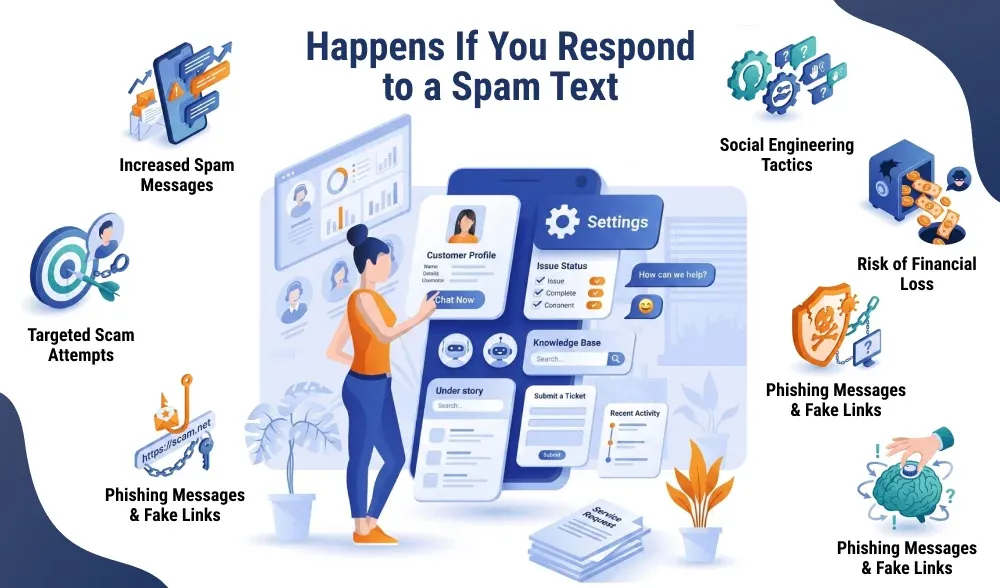
What Happens If You Respond to a Spam Text?
If you reply to a spam text, several things may happen:
Increased Spam Messages
When you respond to a spam text, the sender immediately knows that your number is active. This often leads to a surge in unwanted messages, as your number may be added to lists used by scammers and even sold to other cybercriminals. As a result, you may start receiving more spam texts from different numbers and sources.
Targeted Scam Attempts
Once scammers confirm that you are willing to engage, they may begin sending more personalized and convincing messages. These could include fake alerts from banks, delivery services, and popular apps. The goal is to make their messages appear legitimate so they can trick you into taking further action.
Phishing Messages and Fake Links
After you reply, scammers often follow up with links that lead to phishing websites. These sites are designed to look real and may ask you to enter sensitive information such as passwords, credit card details, and verification codes. Clicking on such links can result in data theft and account compromise.
Social Engineering Tactics
Responding to a spam text can open the door to ongoing conversations where scammers try to build trust. They may pretend to be a customer service agent, a potential employer, or even someone who contacted you by mistake. Over time, they manipulate you into sharing personal and financial information through carefully crafted messages.
Risk of Financial Loss
If the interaction continues, the risk of financial fraud increases. Scammers may convince you to send money, pay fake fees, and invest in fraudulent schemes. Even a small response can escalate into a situation where you are pressured into making payments and revealing banking details.
Exposure to Malware
In some cases, replying to spam texts may lead to messages containing malicious links. If you click on them, your device could be infected with malware, which may steal your data, track your activity, and give attackers access to your accounts.
Psychological Manipulation
Scammers often use urgency, fear, and excitement to influence your decisions. After you respond, they may pressure you with messages like “Your account will be blocked” and “Claim your prize now.” This emotional manipulation increases the likelihood of impulsive decisions.
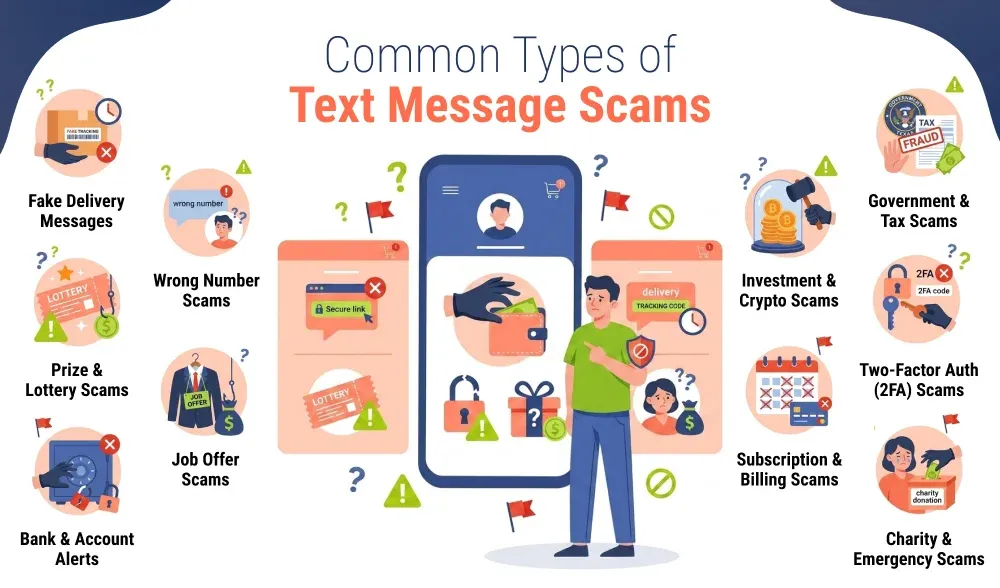
Common Types of Text Message Scams
Understanding common scams can help you avoid them:
Fake Delivery Messages
One of the most common text scams involves fake delivery notifications. Scammers send messages claiming there is an issue with your package, such as a failed delivery and missing address details. These texts usually include a link asking you to “reschedule” and“track” your parcel. Once clicked, the link may lead to a phishing website that steals your payment information.
Bank and Account Alerts
In this scam, attackers impersonate your bank and warn you about suspicious activity on your account. The message often creates urgency, asking you to verify your identity and secure your account immediately. If you follow the instructions, you may end up revealing sensitive information, such as login credentials and one-time passwords.
Prize and Lottery Scams
These messages claim that you’ve won a prize, a lottery, or a giveaway. They often ask you to click a link and provide personal details to claim your reward. In reality, these offers are fake and designed to collect your data and trick you into paying a “processing fee.”
Wrong Number Scams
This scam starts with an innocent-looking message like “Hi, is this Sarah?” or “Sorry, I think I have the wrong number.” If you reply, the scammer continues the conversation to build trust over time. Eventually, they may introduce investment schemes, fake opportunities, and requests for money.
Job Offer Scams
Scammers send texts offering high-paying jobs with minimal effort. These messages may ask you to provide personal information, pay a registration fee, and click a link to apply. The goal is to exploit job seekers by stealing their data.
Investment and Crypto Scams
These texts promote “guaranteed” investment opportunities, often related to cryptocurrency and trading. Scammers promise high returns with little risk and may guide you to fake platforms. Once you invest, your money is usually impossible to recover.
Subscription and Billing Scams
You may receive messages claiming that you’ve been charged for a subscription you don’t recognize. The text urges you to cancel the charge by clicking a link. This link typically leads to a phishing site designed to capture your financial details.
Government and Tax Scams
In this type of scam, attackers impersonate government agencies, claiming you owe taxes and are eligible for a refund. They may threaten legal action and promise quick payments to pressure you into responding. These messages are designed to create fear and urgency.
Two-Factor Authentication (2FA) Scams
Scammers may send messages asking you to share a verification code that was sent to your phone. They often pretend to be from a legitimate service, trying to “verify” your account. Sharing this code can give them access to your accounts.
Charity and Emergency Scams
These scams appear during crises, asking for urgent donations to help victims. While they may seem genuine, many are fraudulent and aim to exploit your goodwill for financial gain.
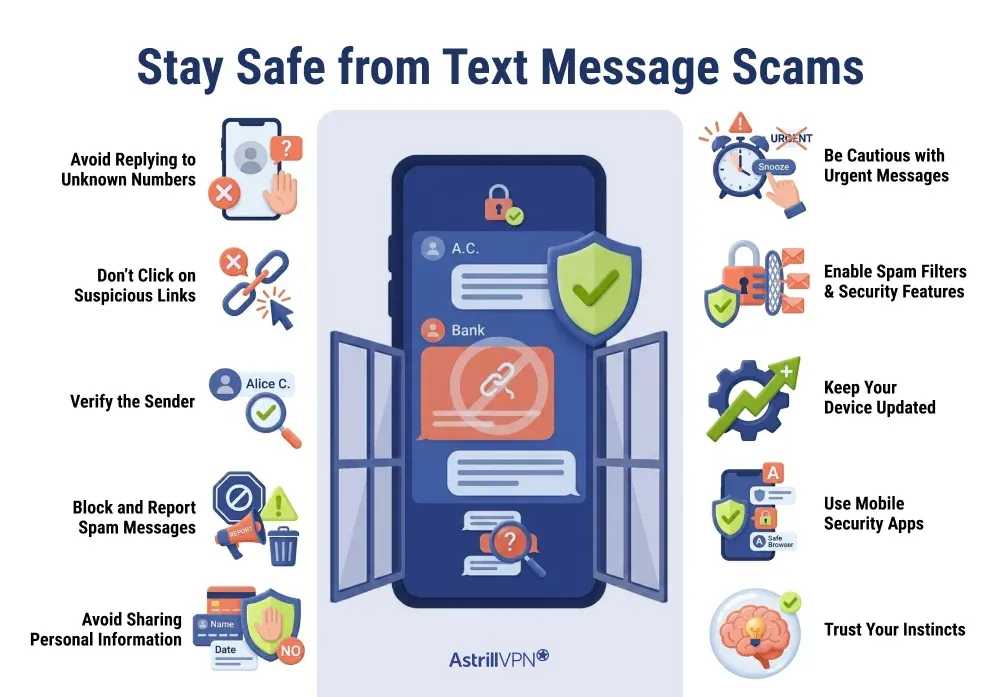
How to Stay Safe from Text Message Scams?
Staying safe from text message scams is not easy, but here are some tactics to follow if you ever encounter them.
Avoid Replying to Unknown Numbers
One of the simplest and most effective ways to stay safe is to avoid replying to messages from suspicious numbers. Even a short response can confirm that your number is active, making you a target for more scams. If you don’t recognize the sender, it’s best to ignore the message altogether.
Don’t Click on Suspicious Links
Scam texts often include links that steal your information and install malware on your device. These links may appear legitimate, but can redirect you to fake websites. To stay safe, never click on links from unknown senders and always verify URLs before visiting them.
Verify the Sender
If a message claims to be from a bank, a delivery service, or a company, do not trust it immediately. Instead, verify the information by contacting the organization directly through official websites and customer support channels. This ensures that you are not interacting with a scammer.
Block and Report Spam Messages
Most smartphones have built-in features that allow you to block and report spam messages. Using these tools helps prevent further contact from scammers and can also help authorities track and reduce fraudulent activity.
Avoid Sharing Personal Information
Never share sensitive information, such as passwords, banking details, and verification codes, via text messages. Legitimate organizations will not ask for such details through SMS. Keeping your personal information private is crucial for protecting yourself from fraud.
Be Cautious with Urgent Messages
Scammers often use urgency, fear, and excitement to pressure you into acting quickly. Messages claiming your account will be locked and that you’ve won a prize are common tactics. Take a moment to think before responding, and avoid making decisions based on emotional triggers.
Enable Spam Filters and Security Features
Many devices and mobile carriers offer spam filtering and security features that can automatically detect and block suspicious messages. Enabling these tools adds an extra layer of protection and reduces the chances of receiving scam texts.
Keep Your Device Updated
Regularly updating your phone’s software ensures that you have the latest security patches. These updates help protect your device from vulnerabilities that scammers and hackers might try to exploit.
Use Mobile Security Apps
Installing a trusted mobile security app can help detect phishing attempts, block malicious links, and provide real-time protection against threats. These apps are especially useful for identifying new and evolving scam techniques.
Trust Your Instincts
If a message feels suspicious or too good to be true, it probably is. Trusting your instincts and being cautious can go a long way in preventing scams. It’s always better to ignore a doubtful message than to risk your personal and financial security.
Conclusion
While you typically cannot be hacked just by replying to a text, responding to suspicious messages can still put you at risk. It can expose you to scams, phishing attempts, and ongoing spam.
The safest approach is simple: don’t engage with suspicious texts. Stay cautious, avoid clicking unknown links, and always verify the source before taking any action. By understanding how these scams work, you can protect your personal information and stay one step ahead of cybercriminals.
FAQs
Here are frequently asked questions.
No, it’s generally not safe. Replying confirms your number is active and may attract more scams.
Not directly. However, they can trick you into revealing sensitive data through conversation and phishing links.
Yes. Clicking on malicious links can lead to phishing sites and to the download of malware that compromises your device.
It depends. When in doubt, it’s better to block the number than reply.
Safe for legitimate businesses complying with regulations
Risky for unknown senders, as it confirms your number is active

Secure your privacy instantly. Try AstrillVPN with zero risk.
About The Author










No comments were posted yet