


Private Relay Vs. VPN – Which Is The Better Option?

Urfa Sarmad
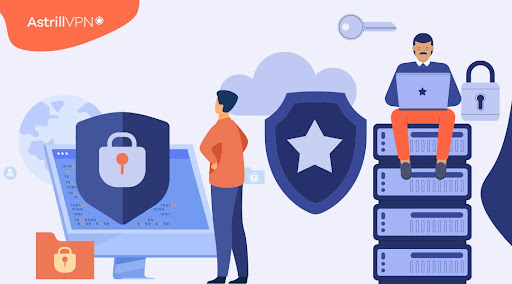
In June 2021, Apple announced a new feature for their iCloud+ service. The new feature introduced was “iCloud Private Relay,” which offers additional security for the Safari web browser. The Private Relay encrypts traffic and hides your IP address, similar to what a VPN does. Or that’s what most would think since people refer to it as Apple’s version of a VPN.
However, the reality is that while Private Relays and VPNs share similar features of traffic encryption and masking a user’s IP address, they’re different. In this guide, we’ll go over the key differences between an iCloud Private Relay and VPN, how Private Relays work, and whether one is better than the other. Stay tuned because we will go over all of this in detail.
Table of Contents
Private Relays Vs. VPN – The Key Differences
Both offer privacy and security but have some essential differences that set them apart.
| iCloud Private Relay | VPN | |
| Purpose | iCloud Private Relays’ primary purpose is to provide online privacy and safety for users while on the Safari Web Browser. It prevents any third parties from tracking your online activity. | VPNs have a broader range of features and offer privacy and security for all online activities, regardless of which application they’re using. |
| Ownership | iCloud Private Relay is a feature Apple provides and is part of their iCloud+ subscription. Apple has the full right and control over its management and operations. | On the other hand, VPNs are third-party services that multiple providers offer. You must subscribe to a premium VPN service to avail yourself of its security features. |
| Encryption & Security | iCloud Private Relays use end-to-end encryption. The encryption is only specific between Apple servers and doesn’t go beyond that. The level of encryption may differ for other internet traffic. | VPNs offer end-to-end encryption for all internet traffic, regardless of which source is being used. It includes data that is coming in as well as data that is going out, therefore ensuring a higher level of security. |
| Compatibility | iCloud Private Relays are only accessible to Apple users and those who are subscribed to the iCloud+ service. It is only compatible with Apple devices and software. | VPNs are compatible with iOS, Android, macOS, Windows, and Linux devices. You can use a VPN regardless of your device or operating system. |
| Traffic Routing | Private iCloud Relays encrypt and route traffic through multiple relays, making it hard for third parties to track your data. | VPN creates an encrypted tunnel between the user’s device and the VPN server. The traffic gets routed through the VPN server. Users can choose which server they want to use and the location of the server. Users have more control over the servers they want to use. |
In a nutshell, Private Relays enhance your privacy only within the Apple ecosystem, whereas VPNs offer a more enhanced security experience. VPNs are also more accessible to users across different platforms and devices.
iCloud Private Relay vs VPN – speed and performance [New heading]
Speed is one of the first things people notice when they use privacy tools. Both iCloud Private Relay and a VPN add extra steps to your internet traffic, which can slow it down. They work in different ways, so their effect on your connection is not the same.
How much does Private Relay slow down your connection?
iCloud Private Relay works kind of like a privacy shield for Safari. Instead of sending your browsing traffic straight to a website, it passes it through two separate servers first. That extra step can slow things down a little, though how much depends on factors like your internet provider, how busy Apple’s servers are, and even your location.
For most people with a solid internet connection, the slowdown isn’t something you’ll notice while casually browsing. Apple says it keeps things moving quickly by using one secure connection, but speed tests sometimes show lower results since they measure multiple connections at once.
Which countries can use iCloud Private Relay?
iCloud Private Relay is available in most countries where iCloud+ is offered. If you are located in a supported region and have an active iCloud+ subscription on a compatible device running iOS 15, iPadOS 15, or macOS Monterey or later, you can enable it from your iCloud settings.
The feature is tied to your device’s detected location, not just your Apple ID region. That means if you travel to a country where Private Relay is not supported, it will automatically turn off. Apple notifies you when this happens, and the feature turns back on when you return to a supported region.
Where is iCloud Private Relay not available?
Apple has not published an official comprehensive list, but based on confirmed reports, Private Relay is unavailable in the following countries:
- China
- Russia
- Belarus
- Kazakhstan
- Turkmenistan
- Egypt
- Saudi Arabia
- South Africa
- Colombia
- Uganda
- Philippines
Most of these restrictions exist because local regulations either require network operators to have access to user traffic or prohibit services that obscure user identities and browsing activity. Turkey has also been reported as unsupported by some users.
Beyond country-level restrictions, iCloud Private Relay can also be blocked at the network level. Some mobile carriers, workplaces, and schools turn it off because it bypasses their traffic monitoring systems. If you’re on one of these networks, you might see a message saying Private Relay isn’t available, even if your country supports it.
This is where VPNs have the upper hand. For example, AstrillVPN works in many of these restricted environments, including places with heavy censorship. Its StealthVPN protocol disguises VPN traffic as regular HTTPS traffic, making it much harder to detect and block.
Which Offers Better Security? Private Relays or VPNs?
| Private Relay | VPN | |
| Encryption | Provides End-to-end Encryption for Apple services. | VPNs have a wide range of Encryption protocols. |
| Data Protection | Private Relays protect all data within Apple’s ecosystem. | VPNs provide security for all internet traffic. |
| IP Address | Private Relays mask the user’s IP address. | VPNs also mask the user’s IP address. |
| Traffic Obfuscation | Private Relays route traffic via multiple relays. | VPNs route traffic through multiple VPN servers. |
| Privacy Policy | Privacy Policy depends on Apple’s policies. | VPNs Privacy Policy also depends on the provider’s privacy terms. |
| DNS Leak Protection | Private Relays protect against DNS leaks within Apple’s services and software. | VPN providers offer DNS Leak Protection. |
It is essential to note that the effectiveness of all these security features depends on the VPN provider. Also, the security measures of VPNs can be affected by factors such as Protocols, Server Locations, and Log Policies.
Can iCloud Private Relay unblock streaming and geo-restricted content?
Private Relay is not built for breaking through geo‑restrictions. Apple designed it to protect your privacy, not to unlock content. When it assigns you a temporary IP address, that address still reflects the region you are actually in. You cannot change that region, pick a server in another country, or trick a streaming service into thinking you are somewhere else.
Apple makes this point clear. Your approximate location stays accurate, and your country and time zone remain fixed. That is intentional because the feature is about privacy, not location spoofing.
Streaming platforms that often block VPNs or proxies usually do not see Private Relay as a problem, since it does not alter your location. The tradeoff is that you cannot use it to access content libraries from other countries.
If your goal is to watch shows or movies that are only available in another region, Private Relay will not help. A VPN is the right tool for that.
Private Relay and Netflix – what you need to know
Netflix, like most of the major streaming services, keeps its libraries locked to geography. The shows and movies you see depend on the country tied to your IP address. Private Relay doesn’t bend that rule. It keeps your IP anchored to your real region, so turning it on won’t suddenly unlock new catalogs.
In everyday use, Netflix runs smoothly with Private Relay. Since your location isn’t being altered, the platform has no reason to block you. The limitation is that Private Relay only applies to Safari traffic. If you’re watching through the Netflix app on your iPhone or using another browser, Private Relay isn’t involved at all.
How Does A Private Relay Work?
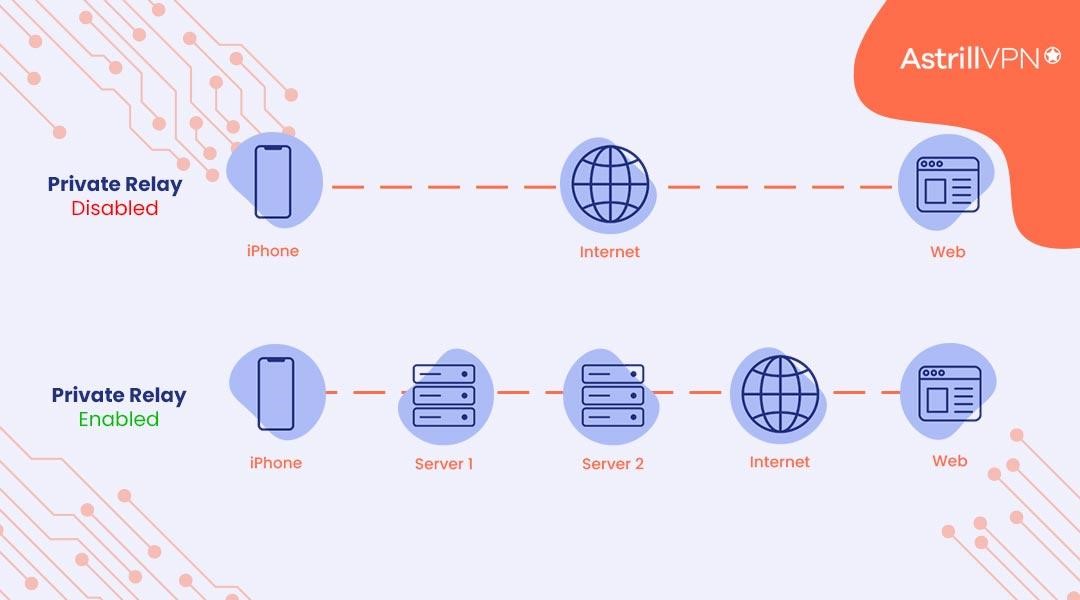
We know why a Private Relay is used and its purpose, but how does it work exactly? When you turn Private Relay on, it works using two relays: an ingress relay and an egress relay. The ingress relay receives encrypted traffic and gives them a temporary IP address.
The temporarily assigned IP address routes traffic to the egress relay. The egress relay then decrypts the traffic and sends it to the intended website.
It’s a two-hop process that ensures that neither Apple nor a third party gets access to the user’s actual IP address and browsing history. An important thing to consider is that Private Relays only provide privacy and security when using the Safari web browser.
It does not provide encryption to all traffic coming to the device. Secondly, this feature is only available to users subscribed to Cloud+ and may have limitations depending on the region you’re living in.
iCloud Private Relay vs VPN – pros and cons
Both tools have their place, but they serve different needs. Here is a straightforward look at what each one does well and where it falls short.
Pros and cons of iCloud Private Relay
Pros:
- Built into Apple devices with no additional apps or configuration required
- Included with iCloud+ at no extra cost beyond the subscription
- Uses a two-relay architecture so no single party, including Apple, can see both your identity and your browsing destination
- Encrypts DNS queries, preventing your ISP from seeing which sites you visit in Safari
- Less likely to be blocked by streaming services since it does not change your apparent country
Cons:
- Only protects Safari traffic. Other browsers, apps, and system traffic are not covered
- No control over server location. You cannot choose where your anonymous IP is assigned
- Cannot unblock geo-restricted content or change your apparent country
- Not available in China, Russia, and several other countries
- Can be disabled by mobile carriers and corporate or school networks
- Speed performance is inconsistent and depends on relay server load
- Limited to Apple devices only
Pros and cons of using a VPN
Pros:
- Encrypts all traffic on your device, including every app, browser, and background process
- Lets you choose from servers in dozens or hundreds of countries, giving you full control over your virtual location
- Can unblock geo-restricted content on streaming platforms like Netflix, BBC iPlayer, and Disney+
- Works across all devices and operating systems, not just Apple hardware
- Offers advanced features like a kill switch, split tunneling, and multiple protocol options
- AstrillVPN includes obfuscation tools that help it work in countries that restrict VPN use
- Consistent, predictable performance that you can optimize by switching servers
Cons:
VPNs are restricted or banned in certain countries, though obfuscation features can help bypass those restrictions
Requires downloading and installing a separate app
Adds a subscription cost on top of what you already pay for internet and iCloud
Technically, the VPN provider routes your traffic through its servers, which requires trust in that provider’s no-logs policy
Some websites and services actively block known VPN IP addresses
Is iCloud Private Relay A VPN?
Private Relay is not a VPN. At first glance, a Private Relay may look just like a VPN. This is because both share the same features of encrypting your traffic and hiding your IP address. But it doesn’t offer anything more than that. A VPN provides more features.
VPNs route internet traffic coming from all sources, whereas Private Relays mainly focus on enhancing privacy for the Safari web browser. Private Relays wouldn’t be termed a VPN since it doesn’t offer comprehensive security solutions.
Private Relays do not provide any security beyond the web browser. VPNs take it further by securing your connection on all devices and applications and accessing geo-restricted content. If you’re looking for something beyond the scope of Private Relays, then VPNs are the right fit.
How To Turn On iCloud Private Relay
- Go to Settings and click your Apple ID name at the top.
- Tap iCloud and then click on Private Relay.
- Toggle the switch to green to turn on Private Relay.
- When you turn the iCloud Private Relay on, you can go to the IP Address Location to decide which location information you want to share.
- You can use a general location or your country’s time zone.
- You can access the Private Relay feature on macOS by going to Apple ID and then iCloud in System Preferences.
Wrapping Up: Which is the Better Option?
As we’ve already discussed, both Private Relays and VPNs offer security. They mask your IP address and encrypt traffic. But that’s the only similarity they share. How to determine which one is better than the other? As discussed earlier, VPNs encrypt your internet connection such as AstrillVPN, whereas Private Relays are only limited to the Safari web browser.
AstrillVPN have more location options, and you have thousands of IP addresses. Unlike VPNs, private Relays have minimal location options, and you can’t change your location.
Private Relays are only limited to Apple devices, and even then, require an iCloud+ subscription service. VPNs can work on multiple devices and operating systems.
At the end of the day, it all boils down to your personal goals. If you want to enhance your security and bypass geo-location restrictions, VPN is the right fit. If you’re concerned about your online safety and security and need that extra layer of protection, then a Private Relay just won’t cut it.
On the other hand, if your only concern is making sure that third parties and advertisers don’t get their hands on your confidential data, then go for a Private Relay. iCloud Private Relays are fast and easier to use than VPNs so you can set it up in next to no time.
FAQs
iCloud Private Relay is an Apple feature introduced with the iOS 15 update. It is accessible for people who are subscribed to iCloud+ and is available on iPhone, iPad, and other macOS devices. Although described as similar to a VPN, a VPN offers more features.
iCloud Private Relay is more browser-specific and only protects the Safari browser. Traffic coming from any other source on your device remains unprotected.
Your web traffic has lots of confidential data about you, such as your IP address and DNS records. Private Relays help keep your DNS records and IP address details private and ensure that third parties, such as your Internet Service providers and Apple itself, cannot identify or see which websites you’re visiting.
The Private Relay feature helps you safeguard your online privacy so that no one can exploit your identity and credentials. It offers security when browsing the internet. It encrypts internet traffic and routes it through two separate relays to mask the user’s IP address and location.
Private Relay is a feature for the Safari web browser. You cannot be tracked with a Private Relay. Websites cannot track users’ online activities as they’re provided with a masked IP address.
If your only concern is ensuring that advertisers and third parties don’t use your data, then having Private Relay is a great option. It will protect your online identity.
When Private Relay is turned on, internet traffic gets encrypted, meaning websites cannot see your IP address. Third parties can’t detect who you are or which websites you visit.
Yes, it’s good to use Private Relay on iPhone. It was specifically created to safeguard your privacy so that no one can see who you are or your online activities when browsing the Safari web.
iPhones don’t come with built-in VPNs. If you want a VPN, you must download and install it from the App Store. iPhones only have a built-in VPN client; you must connect to a VPN server to know its details.
Secure your privacy instantly. Try AstrillVPN with zero risk.
About The Author
No comments were posted yet