
Why People Use VPNs in 2026: Beyond Streaming & AI

Bisma Farrukh
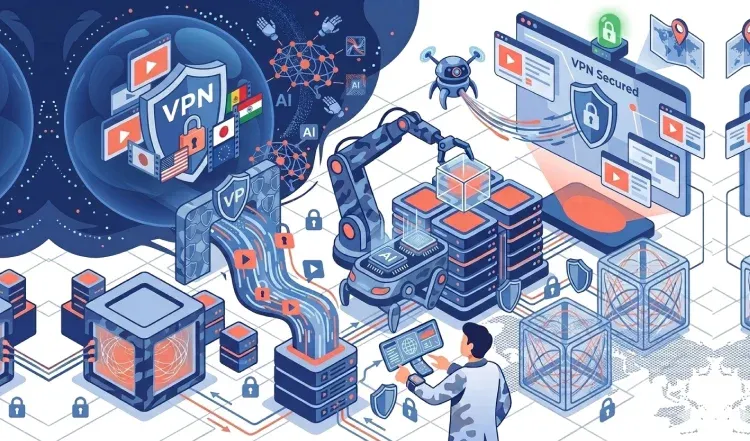
Virtual Private Networks (VPNs) have transformed from niche security tools into everyday digital essentials. In 2026, nearly 23% of global internet users rely on VPNs, reflecting the evolution of online behavior and risks. While streaming geo-restricted content once dominated VPN usage, today’s users turn to VPNs for a wide range of reasons, including accessing AI tools, protecting privacy, and navigating stricter internet regulations. As digital ecosystems become more complex, VPNs are increasingly seen as a necessity rather than an option.
Table of Contents
The Evolution of VPN Usage
VPNs were originally designed for businesses to secure internal communications, but they have now become widely adopted by individuals. This shift is driven by growing awareness of online privacy risks and the increasing number of cyber threats. Today, users from all backgrounds, like students, freelancers, remote workers, and everyday internet users, depend on VPNs to protect their online activity. Studies show that 66% of users use VPNs for data protection, highlighting how security remains a primary driver of adoption even as new use cases emerge.
Key VPN Usage Statistics (2026)
- 23% of global internet users use VPNs. This percentage indicates that nearly a quarter of the world’s internet users have adopted VPN technology.
- 66% use VPNs for data protection. A significant majority of VPN users use these services primarily to safeguard their personal data.
- Over 50% use VPNs for streaming content. Many people use VPNs to bypass geographical restrictions and access streaming services that may not be available in their region.
- During periods of political unrest, governmental censorship, or major global events, VPN usage can increase by an astronomical amount, sometimes exceeding 253%.
- Beyond individual users,28% of VPN users use these services for business purposes.
AstrillVPN for Streaming and AI Tools
AstrillVPN is widely used for streaming because of its strong focus on speed and geo-unblocking capabilities. It allows users to access popular platforms like Netflix, Hulu, Disney+, and BBC iPlayer by masking their real location and connecting through global servers.
One of its biggest advantages is performance. With high-speed protocols like WireGuard and access to hundreds of servers across 55+ countries, Astrill can deliver buffer-free HD and even 4K streaming when connected to optimized servers. This is especially useful for users who experience ISP throttling, as the VPN masks streaming activity and helps maintain consistent speeds.
Another key feature is StealthVPN technology, which helps bypass VPN detection systems used by streaming platforms. This means users can still access geo-blocked content even in regions where VPN usage is restricted. It’s worth noting that streaming performance can sometimes require manual server switching, as access to certain platforms may not always be consistent across all servers.
AstrillVPN for AI Tools Access
In 2026, one of the fastest-growing uses of VPNs is accessing AI platforms that are restricted in certain countries. AstrillVPN is particularly useful in this area because it can bypass strict firewalls and regional blocks.
Its advanced obfuscation protocols, including StealthVPN and OpenWeb, are designed to disguise VPN traffic as normal internet traffic. This makes it easier to access AI tools in countries with heavy restrictions or surveillance.
With servers in dozens of countries, users can:
- Connect to regions where AI tools are available
- Test AI platforms with fewer restrictions
- Access early releases of AI services
Key Features That Support Streaming and AI Usage
High-Speed Global Network
AstrillVPN offers a network of high-performance servers in 142+ cities, ensuring low latency and stable connections for both streaming and AI tool usage.
Unlimited Bandwidth
Users can stream or use data-intensive AI tools without worrying about data caps, which is essential for tasks like video streaming or interacting with AI models.
Smart Mode and Split Tunneling
Astrill’s Smart Mode allows users to route only specific apps through the VPN. This is useful when accessing AI tools while keeping other apps on a normal connection.
Strong Encryption and Privacy
With SSL encryption and no-logs features, Astrill ensures that both streaming activity and AI interactions remain private and secure.
Why do people use VPNs for streaming?
The following are the key reasons why people use VPNs for streaming.
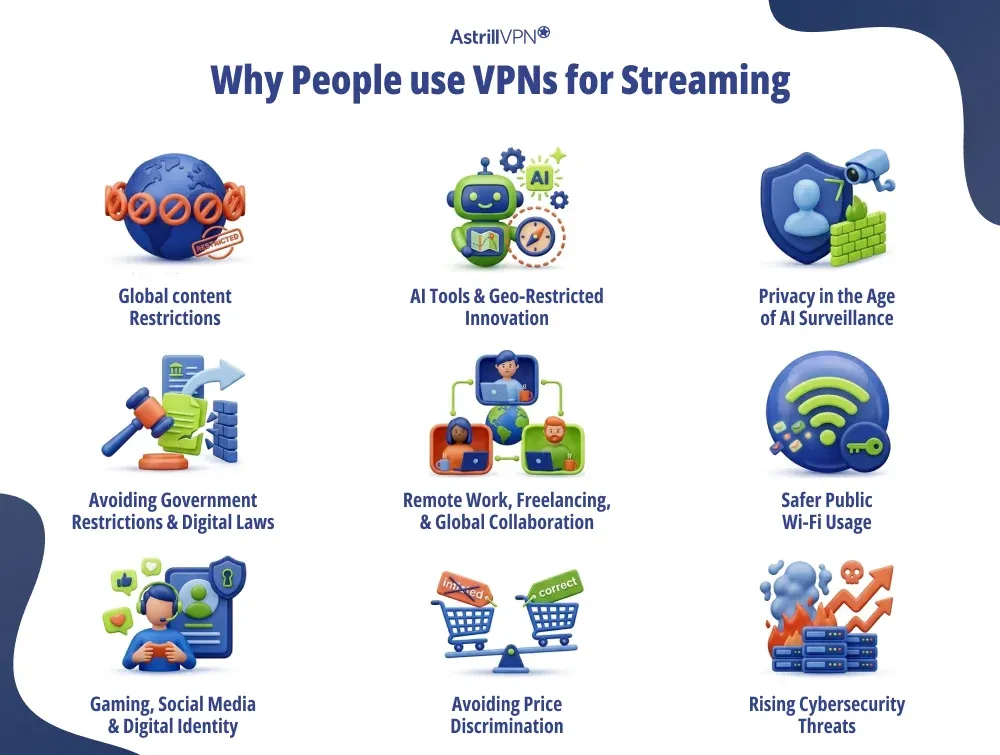
1.Global content Restrictions
Accessing Global Content Libraries
Streaming remains one of the most common reasons people use VPNs. Many streaming platforms offer different content libraries depending on geographic location, which can limit access for users in certain regions. VPNs allow users to connect to servers in other countries, unlocking a broader range of movies, TV shows, and live events. This flexibility has made VPNs especially popular among entertainment enthusiasts.
Avoiding Content Restrictions
In addition to expanding content libraries, VPNs help users bypass censorship and regional restrictions. This is particularly important in regions where access to certain media is limited. By masking their IP address, users can freely explore global content without being restricted by local regulations, making VPNs a tool for both entertainment and digital freedom.
2. AI Tools and Geo-Restricted Innovation
Access to AI Platforms
One of the biggest shifts in 2026 is the use of VPNs to access AI tools. Many advanced AI platforms are released in specific regions first or are restricted due to regulatory requirements. VPNs allow users to bypass geographic restrictions and access tools that are not available in their country. This is particularly useful for developers, researchers, and digital professionals who rely on cutting-edge technologies.
Bypassing AI Content Filters
Some users also use VPNs to navigate around strict regional content filters applied to AI tools. These filters can vary significantly between countries, affecting how AI systems respond or what content they allow. By connecting through a different region, users can experience fewer restrictions and access more flexible AI functionalities, making VPNs an important tool in the AI-driven digital landscape.
3. Privacy in the Age of AI Surveillance
Rising Data Collection Concerns
With the rise of AI-powered analytics, companies and platforms are collecting more user data than ever before. This includes browsing habits, location data, and personal preferences. As a result, privacy concerns have grown significantly. Around 40% of VPN users cite privacy as their main reason for using these tools, showing how important anonymity has become in today’s digital world.
Protection Against AI-Powered Tracking
VPNs help reduce exposure to AI-driven tracking by masking the user’s IP address and encrypting their internet traffic. This makes it harder for advertisers, data brokers, and even malicious actors to build detailed profiles. As AI continues to enhance tracking capabilities, VPNs serve as a critical line of defense for maintaining online privacy.
4. Avoiding Government Restrictions and Digital Laws
Rise of Online Regulations
Governments around the world are introducing stricter digital regulations, including content filtering, surveillance policies, and identity verification requirements. While these measures are often aimed at improving safety, they can also limit access to information and reduce online freedom. This has led many users to seek alternative ways to maintain unrestricted internet access.
VPNs as a Tool for Digital Freedom
VPNs allow users to bypass these restrictions by connecting through servers in different countries. This helps them access blocked websites, use restricted apps, and maintain anonymity online. During periods of increased censorship, VPN usage often spikes dramatically, sometimes by thousands of percent, demonstrating their importance as tools for digital freedom.
5. Remote Work, Freelancing, and Global Collaboration
Secure Access to Work Networks
As remote work continues to grow, VPNs have become essential for securely accessing company networks. They create encrypted connections that protect sensitive data from unauthorized access, making them a standard tool for businesses and remote employees alike. This is especially important when working with confidential information or accessing internal systems.
Bypassing Regional Work Barriers
Freelancers and global professionals also use VPNs to overcome regional restrictions on platforms and services. By connecting through different locations, they can access tools, marketplaces, and resources that may otherwise be unavailable. Around 28% of users rely on VPNs for business-related activities, highlighting their role in enabling global work opportunities.
6. Safer Public Wi-Fi Usage
Protecting Data on Public Networks
Public Wi-Fi networks are convenient but often insecure, making them a common target for cyberattacks. Hackers can intercept data transmitted over these networks, potentially gaining access to sensitive information such as passwords and financial details. VPNs address this risk by encrypting internet traffic, ensuring that data remains secure even on unsecured networks. This is why a significant portion of users turn to VPNs whenever they connect to public Wi-Fi.
7. Gaming, Social Media, and Digital Identity
Gaming Performance and Access
Gamers increasingly use VPNs to enhance their online experience. By connecting to servers in different regions, they can access exclusive game releases, join international servers, and sometimes reduce latency. VPNs also protect against DDoS attacks, which can disrupt gameplay and compromise user accounts.
Social Media Privacy
Social media platforms track user activity extensively, raising concerns about privacy and data usage. VPNs help users maintain anonymity by masking their location and preventing platforms from collecting accurate tracking data. They also allow access to social media platforms that may be restricted in certain regions, giving users greater control over their online presence.
8. Avoiding Price Discrimination
Getting Better Deals Online
Many online services and e-commerce platforms use dynamic pricing, where costs vary based on a user’s location, browsing history, or demand. VPNs allow users to compare prices across different regions by changing their virtual location. This can lead to significant savings on flights, subscriptions, and digital services, making VPNs a practical tool for cost-conscious users.
9. Rising Cybersecurity Threats
Protection Against Online Threats
Cybersecurity threats continue to rise, with hackers using increasingly sophisticated methods to exploit vulnerabilities. VPNs provide an added layer of protection by encrypting data and hiding user identities. While they are not a complete solution for all cyber threats, they play a crucial role in reducing risk and enhancing overall online security. This has contributed to the growing perception of VPNs as essential tools for everyday cybersecurity.
Conclusion
In 2026, VPNs have become far more than tools for streaming or basic privacy. They now play a critical role in accessing AI technologies, protecting against advanced tracking, and maintaining digital freedom in an increasingly regulated online world. As internet usage continues to evolve, VPNs are set to remain an essential part of how people interact with the digital space by offering both security and flexibility in a rapidly changing environment.
FAQs
VPNs are more popular due to increased privacy concerns, the rise of AI-driven tracking, and the need to bypass geo-restrictions and digital regulations.
No, streaming is just one of many use cases. People now use VPNs for privacy, access to AI tools, remote work, and online security.
Yes, VPNs allow users to connect through regions where certain AI tools are available, enabling broader access.
VPN legality depends on the country. In most regions, VPNs are legal, but some governments impose restrictions.
Yes, VPNs encrypt your internet connection and help protect your data from hackers, trackers, and surveillance.

Secure your privacy instantly. Try AstrillVPN with zero risk.
About The Author


No comments were posted yet