




The two options available on the table are a VPN and a Tor browser when it comes to online privacy. But the question that worries almost everyone is which one is better? The most straightforward answer to this question is ‘why do you need it?
Both of them have their strengths and weaknesses, but in all honesty, a VPN can be used for almost everything compared to a Tor browser.
In this guide, we have provided a clear Tor vs. VPN comparison to help you understand their difference better. Also, after going through this guide, you will be able to make a decision easily, whether you want a Tor browser or a VPN.
Before we compare both of them, let us look at Tor and VPN. Once that is cleared, we will dive right into comparing different aspects.
Table of Contents
Tor vs. VPN:
What is Tor
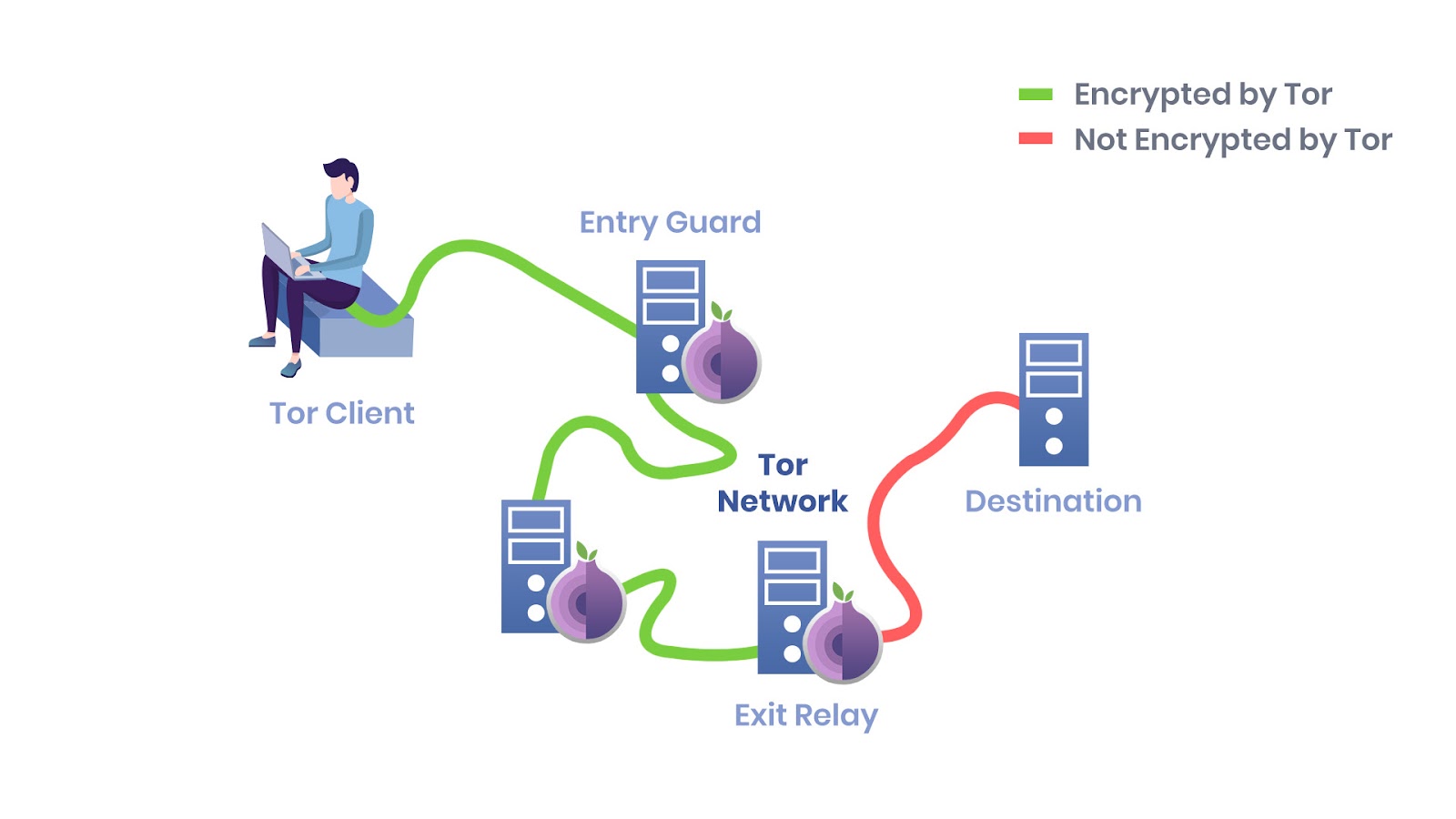
Tor, or “The Onion Router,” is an open-source privacy tool that encrypts users’ traffic and passes it through different nodes/ servers. This encrypted communication through other nodes or servers protects users’ identities and allows them to stay anonymous over the web.
Key Points:
- It has a network of servers, which it uses to pass its traffic through.
- It encrypts users’ traffic and passes it through three nodes; a guard node, a middle node, and an exit node.
- During this communication between the nodes, the traffic encryption is changed from time to time, which makes it hard to be intercepted.
- Even Tor’s network operators cannot track user activity on a Tor browser.
What is VPN
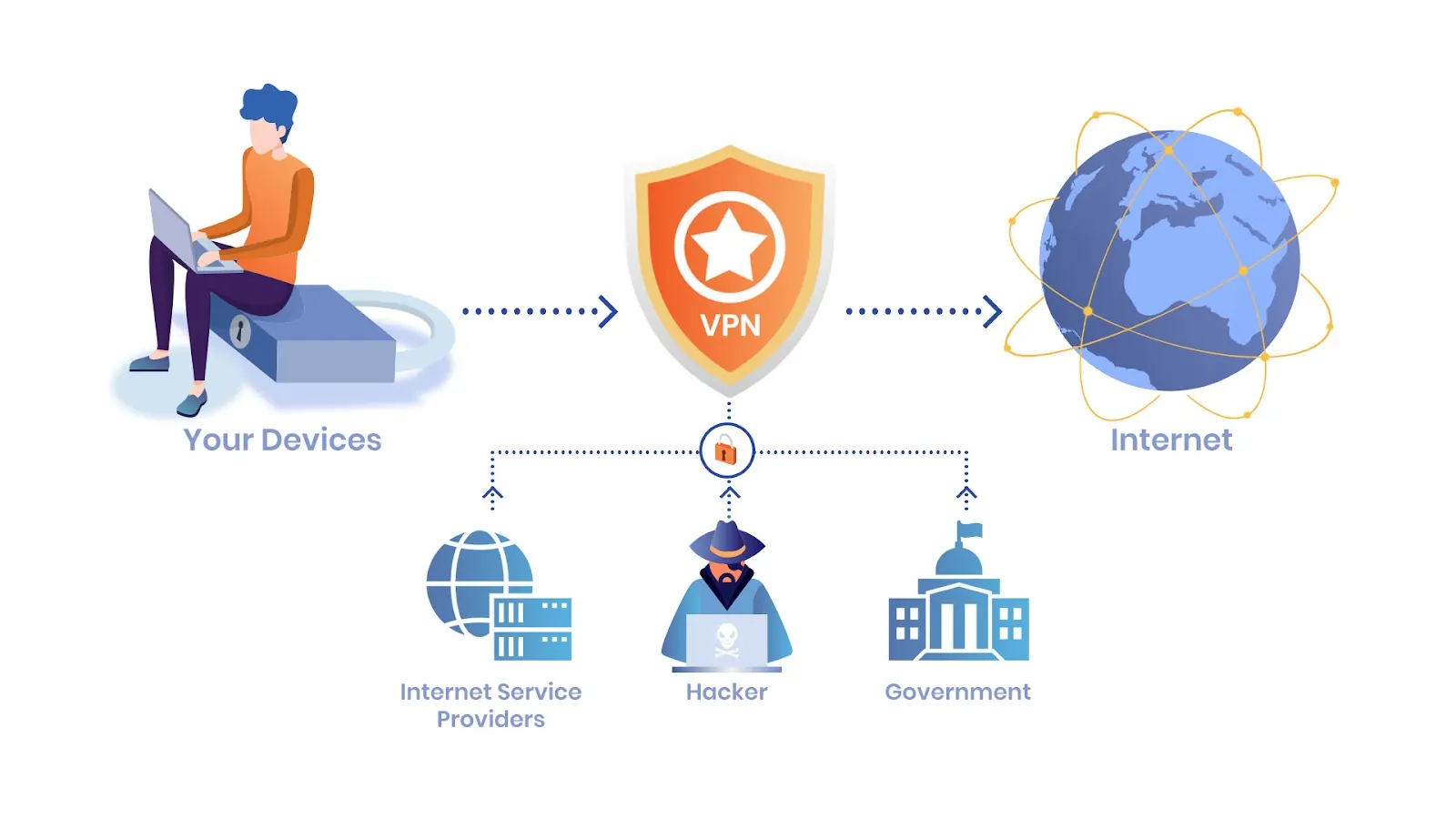
A VPN (Virtual Private Network) is software that protects your online privacy by connecting you to one of its secure servers and encrypting your traffic.
Key Points:
- Once you are connected to a VPN server, it assigns you a new DNS and IP address; hence your original IP and DNS are masked, and your location is untraceable.
- A premium VPN such as AstrillVPN provides security through various VPN protocols like OpenWeb, PPTP, L2TP/ IPsec, OpenVPN, SSTP, IKEv2, etc.
- Good VPNs are paid, but as we all know, all good things have a price!
When should you use Tor?
There are specific reasons you should use Tor, like
- Free Option for Online Privacy: If you are looking for a free tool to browse perform transactions, use the Tor browser.
- Secure and Untraceable Communication: If you are a journalist, researcher, or someone who wants to keep your identity hidden, Tor is the best option.
- To access the Dark Web: If you want to access the Dark Web, using Tor is the best way to do it.
It’s a user-friendly tool, and you do not need to be very smart to use it. Simply download the Tor browser, which is unrestricted, install it, and start surfing the web.
When should you use a VPN?
You should opt for a VPN for the following reasons:
- Complete security: If you are looking for something that protects you completely, you should be using a VPN. It allows you to either secure your network connection entirely or choose between securing your apps or your browser.
- Access Geo-restricted content: If you want to stream geo-restricted content, use geo-blocked apps, or access geo-blocked sites, then you should use a VPN.
- Execute secure transactions: If you use online banking apps and financial platforms for performing transactions, then you should use a VPN to secure your network. Otherwise, you can fall prey to hackers and authorities.
- Share data safely: With a VPN, you can enjoy complete anonymity and share data with others without worrying about any spying eyes or hacking attempts. As a VPN secures your connection, thus your data is also safe.
- For Torrenting: You can also use a VPN if you use torrents. VPNs have P2P protocol, which enables users to enjoy Torrents safely.
- To protect your App data and traffic: If you opt for a reliable VPN like Astrill, you get a fantastic ‘WireGuard’ feature that secures all of the apps on your device and maintains complete online privacy.
- To spoof your location: Use a VPN to keep yourself safe from spying on government agencies and avoid censorship.
A VPN covers almost all aspects of online privacy that a user needs.
Which one should you use? A quick breakdown by use case
Still not sure which one fits your situation? Here’s a quick breakdown by use case.
- Everyday browsing and streaming: Use a VPN. It keeps your speed intact and unlocks geo-restricted content that Tor cannot.
- Journalism or activism: Use Tor. It’s built to protect your identity when the stakes are high, especially in regions with heavy surveillance.
- Torrenting: Use a VPN. Tor’s network isn’t built for large file transfers, and most relay operators actively discourage P2P traffic on their nodes.
- Online banking or financial transactions: Use a VPN. Its consistent speed and encrypted tunnel make it the safer, more reliable choice for anything sensitive.
- Accessing the dark web: Use Tor. It’s the only way to reach .onion sites, though pairing it with a VPN adds an extra layer of protection.
- Maximum anonymity regardless of speed: Use Tor, or combine it with a VPN for the strongest setup.
Head-to-Head Comparison: Tor and VPN
| VPN | Tor | |
| Speed | Excellent | Poor |
| A VPN have highly optimized servers that provide unthrottled bandwidth. This is why a VPN offers better speed than Tor Browser. | Tor Browser does regionally designated and Optimized servers. It passes the traffic through nodes, so it does not provide good speed. | |
| Encryption and security | Excellent | Fair |
| Most VPN providers offer AES 256-bit military-grade encryption, which is the best encryption available at the time. | Tor browser currently provides AES 128-bit encryption. | |
| Anonymity | Excellent | Excellent |
| Due to the robust security protocols and features like ‘Kill Switch,’ a VPN ensures complete anonymity. | Tracing a Tor connection back to its original user is almost impossible. This is why its anonymity is excellent. | |
| Pricing | Paid | Free |
| There are a few free VPNs, but the best VPN providers charge a subscription fee. | Tor browser is completely free to download and use. | |
| Content unblocking | Unblocks everything | Partial |
| A VPN can unblock anything. Be it a streaming service, a geo-restricted website or an app. | Tor does not block everything and it fails to unblock geo-blocked content. | |
| Ease of use | Very Easy | Easy |
| VPNs are very easy to use as you can easily download the app, and every VPN app has a user-friendly interface. | Tor Browser is also easy to use but sometimes newbies are left clueless about how to use it. | |
| Legality | Legal | Legal |
| It is legal to use a VPN globally, except for China. | Using a Tor Browser is not illegal but due to its system design, it can put you in trouble. | |
| Trustworthiness | Highly Trustable | Partially Trustable |
| The service of a VPN is highly trustable because of its strong security protocols and its amazing features. Also, the top-of-the-line VPNs also go through third-party audits to prove their claim of zero user logs. | Tor Browser is trustworthy because of the fact that even its operators cannot track your activity. However, due to the chances of facing legal issues in case of an illicit activity traced at your exit node, it is less trustable than a VPN. | |
| Authority Control | Centralized | Decentralized |
| VPNs are centralized, meaning they are managed from one location and controlled by one entity as the authority. A VPN could have thousands of servers in different locations throughout the globe. This is why you can trust the VPN provider as you are aware of the brand and the organization. | Tor is not controlled by a single entity. Its “nodes” or “relays,” are run by thousands of volunteers worldwide. Since the proxy servers or nodes are managed by strangers, you cannot trust the people in the chain. |
Is Tor Browser the same as the Tor network?
Not quite, and the difference trips up a lot of people. The Tor network is the system of volunteer-run nodes that routes and encrypts your traffic. The Tor Browser is simply the tool most people use to access that network, a modified version of Firefox preconfigured to route everything through Tor.
You can technically reach the Tor network through other methods, but the Tor Browser is the safest and most tested option for most users. When people say “using Tor,” they almost always mean the browser.
Can You Use VPN and Tor at the same time?
For the best possible level of anonymity and privacy, using both Tor and a VPN is highly suggested. On the other hand, a VPN alone can be the way to go if you prioritize ease of use and speed.
There are two ways you can use both VPN and Tor together:
1. VPN then Tor
This is the most highly recommended approach. Before accessing the Tor Browser, it is necessary to establish a connection with a VPN server. By implementing this approach, the Tor network will be safeguarded from hostile exit nodes. Furthermore, you should not be concerned about your home network detecting your use of Tor, as it will only perceive encrypted data being transmitted to your VPN server.
2. Tor then VPN
This approach is hardly used and generally not endorsed by most VPN providers. Initially, you would establish a connection to the Tor network and subsequently establish a connection to a VPN server. This approach needs a higher level of anonymity than Tor over VPN and may also decrease internet speed.
Is Tor completely anonymous?
Tor offers strong anonymity, but calling it completely anonymous overstates what it can guarantee. A few factors decide how much protection you actually get.
Network Structure
Tor routes your traffic through three nodes: a guard node, a middle node, and an exit node. Each node only knows the address of the one before it and the one after it, so no single node sees the full picture. The exit node is where your data leaves the Tor network and enters the regular internet, and it can see unencrypted traffic if the site you’re visiting doesn’t use HTTPS.
Exit Node Risks
Anyone can run a Tor exit node, including bad actors. A malicious exit node can monitor unencrypted traffic passing through it, and there have been documented cases of exit nodes being used to inject malware or steal data. Sticking to HTTPS sites limits this risk significantly, since the exit node only sees encrypted traffic it can’t read.
Correlation Attacks
A well-resourced attacker who can monitor traffic entering and leaving the Tor network at the same time may be able to match patterns and identify a user, even without breaking Tor’s encryption. This is called a timing or correlation attack. It takes significant resources and is mostly a concern for high-risk users being targeted by nation-states, not everyday browsing.
Encrypted Traffic
Tor encrypts your data at each relay point, which makes it hard to trace back to its source while it’s inside the network. Once it reaches the exit node, that protection ends unless the destination site uses its own encryption (HTTPS). If it doesn’t, whatever leaves the exit node is exposed.
Browser Fingerprinting
Even with Tor’s traffic encryption, your browser can still leak identifying details, like screen resolution, installed fonts, or plugin configuration. Sites can use this fingerprint to track you across sessions regardless of your IP address. The Tor Browser is designed to minimize this by making every user’s browser look as similar as possible, but no browser fingerprint protection is perfect.
User Behavior
Tor can’t protect you from yourself. Logging into personal accounts, entering identifying details, or reusing usernames across sessions can undo Tor’s anonymity instantly. Misconfigured settings or accidental leaks work the same way.
ISP Awareness
Your ISP can’t see what you’re doing on Tor, but it can tell you’re using it, since Tor traffic has a recognizable pattern. In some countries, this alone can draw attention, even if the content stays private.
Threat Model
How much anonymity you need depends on what you’re protecting against. For everyday privacy and avoiding casual tracking, Tor offers plenty of protection. For high-risk situations like evading targeted state surveillance, Tor alone isn’t enough, and additional precautions matter.
Verdict: Which one is better!
After all the comparisons, without a single fraction of doubt, a VPN is the better option!
Tor is free, easy to use and all but a fast VPN is better than Tor in many aspects. Things like security, features, variety, speed etc. matter a lot, when it comes to online privacy.
If we were to sum the whole debate in a single sentence, then we can say that a VPN can be used for almost everything but Tor can be used for anonymously surfing the web only.
FAQs
No, Tor is not safer than a VPN because it only encrypts your traffic passing through its browser and it does not secure the complete network. Therefore your ISP cannot track what you’re doing over the browser but he can see that you are using Tor.
Yes, you can use Tor with a VPN. In fact, if you connect to a VPN server and then use Tor, your whole network is secured, and using Tor becomes much safer.
Yes, Tor (The Onion Router) itself is legal in most countries. It was initially developed by the U.S. Navy and later became a project maintained by a nonprofit organization, The Tor Project. Tor is a privacy-focused network that allows users to browse the internet anonymously by routing their internet traffic through a series of nodes, encrypting it at each step.
However, while using Tor itself is legal in many places, some activities conducted through Tor may be illegal, such as accessing or distributing illegal content, conducting illegal activities, or violating the laws of a particular country.
Using a VPN is totally legal and there are no restrictions on its use. However, you cannot use a VPN in China. Nevertheless, if you do want to access content from China, then you can use Astrill VPN.

Secure your privacy instantly. Try AstrillVPN with zero risk.
About The Author











No comments were posted yet