




AI Scams in 2026: What They Are and How to Protect Yourself?

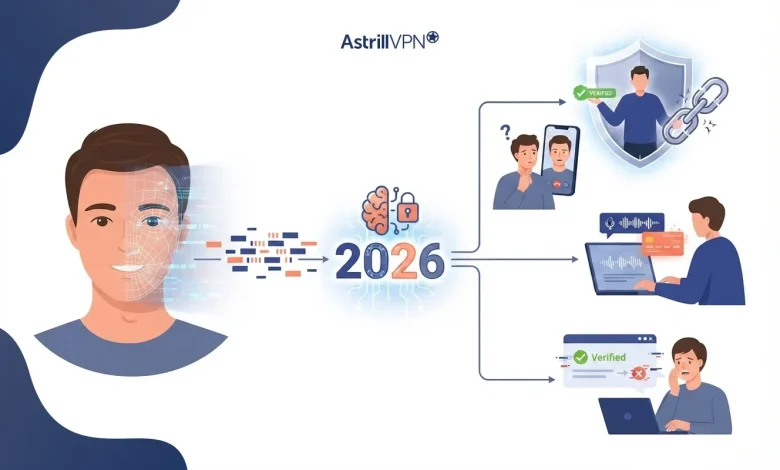
Artificial intelligence, or AI, is changing nearly all industries from healthcare and education to finance and customer service. Companies are using AI to reduce operational costs, enhance client satisfaction, and make decisions based on large volumes of data within seconds. However, the same technological advancements also allow cybercriminals to commit more crimes.
AI fraud is getting smarter, so the line between legitimate and dishonest correspondence is becoming blurrier. Unlike older types of fraud that usually involved poorly written or generic texts and were easily detectable, the new AI-based scams are fully targeted and can mimic any kind of behavior. These scammers can generate a highly convincing phishing e-mail, imitate a person’s voice, a deepfake video of a person, and even design a fake website that is almost identical to one of the leading brands. Such an attack can mislead people, companies, and even well-trained cybersecurity experts.
According to Deloitte’s Center for Financial Services, generative AI could increase fraud losses in the United States to over $40 billion by 2027, up from approximately $12.3 billion in 2023, underscoring the growing financial impact of AI-powered scams. Cybersecurity researchers are also seeing a dramatic rise in attacks like AI-assisted phishing, voice cloning, and deepfake impersonation scams. Such attacks are carried out by criminals using advanced technologies to mimic a person’s real voice and face, thereby fraudulently acquiring sensitive information not only from companies’ premises but also from ordinary people’s premises in different places around the world.
Through this article, we will uncover AI scams: what they are, why they have been on the rise, the methods used by scammers to lure the victims, and the measures you can adopt to safeguard and keep up with the latest threats of AI-assisted scams.
Table of Contents
What Are AI Scams?
Artificial Intelligence-based scams are malicious strategies in which cybercriminals exploit AI to deceive people into opening their hearts or wallets, sharing personal passwords, downloading malware, and disclosing other secrets. Rather than doing away with cybercrime as we know it, AI is simply augmenting it by making attacks more realistic, targeted, and scalable to the point that they can affect many targets and thus yield substantial profits.
Using AI technology, the perpetrators create text, images, audio, and videos that are so realistic they resemble real-life authentic communication. They can impersonate an executive, a sibling, or a financial company with an amazing level of perfection. U.S. consumers lost more than $12.5 billion to fraud in 2024, with AI expected to make scams even more effective.
AI scams still have the same aim as conventional fraud does: to get money, personal stuff, or other secrets of the victim and business through login credentials. With Artificial Intelligence, however, not only can perpetrators carry out these frauds more quickly, but they can also do so better.
How AI Fraud Differs from Traditional Scams?
Traditional scams often relied on mass-distributed emails containing spelling mistakes, awkward language, or generic messages. Many recipients could easily recognize these attempts as fraudulent. As a result, victims are far more likely to trust these communications, increasing the success rate of AI-powered attacks.
AI-powered scams are fundamentally different. Artificial intelligence enables criminals to:
- Personalize messages using publicly available information from social media and online profiles.
- Generate grammatically flawless emails and text messages.
- Clone voices from only a few seconds of recorded audio.
- Produce convincing deepfake videos of public figures or company executives.
- Automate thousands of customized phishing attempts simultaneously.
Why Are AI Scams on the Rise?
The rapid adoption of generative AI has transformed the cybercrime landscape. Sophisticated attacks that once required specialized technical skills can now be created with minimal effort using publicly accessible AI platforms.
Several factors are driving the rise of AI scams.
Easy Access to AI Tools
Generative AI platforms have become widely available and easy to use. While these tools are designed for legitimate purposes such as writing, programming, and content creation, criminals exploit them to generate phishing emails, fraudulent advertisements, fake customer support conversations, and malicious scripts. 81% of surveyed organizations experienced attempted or successful AI-powered fraud. This accessibility allows even inexperienced attackers to create convincing scams without advanced cybersecurity knowledge.
Lower Costs for Cybercriminals
Traditional social engineering campaigns required significant time and manual effort. AI dramatically reduces these costs by automating content creation and communication. A scammer can now produce hundreds of personalized phishing emails within minutes instead of spending hours crafting individual messages.
Automation at Massive Scale
Artificial intelligence enables criminals to automate nearly every stage of a cyberattack. This automation allows cybercriminals to target millions of users worldwide with minimal human involvement. AI systems can:
- Research potential victims.
- Generate customized phishing emails.
- Respond automatically to victims.
- Translate scams into multiple languages.
- Optimize attacks based on victim responses.
More Convincing Personalization
People are naturally more likely to trust messages that appear relevant to their personal lives. This level of personalization makes AI scams significantly more difficult to identify. AI can analyze social media profiles, company websites, online resumes, and publicly available databases to craft messages that include:
- Your name
- Employer
- Job title
- Recent activities
- Business relationships
- Family connections
Rapid Improvements in Deepfake Technology
Deepfake technology has improved dramatically over the past few years. AI can now generate realistic videos and voices that closely resemble real individuals. As deepfake technology becomes more accessible, these attacks are expected to become increasingly common.
Cybercriminals use these capabilities to impersonate:
- CEOs
- Government officials
- Financial advisors
- Family members
- Celebrities
- Customer service representatives
How Scammers are using AI?
Artificial intelligence is now integrated into nearly every stage of modern cybercrime. Rather than relying on a single technique, attackers combine multiple AI-powered tools to maximize the effectiveness of their scams.
AI-Powered Phishing Emails
Phishing remains one of the most common cyber threats, but AI has made phishing campaigns significantly more convincing.
Instead of sending generic emails filled with grammatical mistakes, scammers use AI to create professional-looking messages that closely resemble communications from trusted organizations.
AI-generated phishing emails often include:
- Personalized greetings
- Accurate company branding
- Professional formatting
- Contextual information
- Convincing urgency
- Error-free writing
For example, an employee may receive what appears to be an email from their manager requesting an urgent payment or password reset. The message may reference actual projects or recent meetings gathered from publicly available information, making it appear completely legitimate. AI also enables attackers to generate phishing emails in multiple languages, allowing global campaigns to reach victims worldwide.
Voice Cloning Scams
Voice cloning has emerged as one of the fastest-growing forms of AI fraud. Using only a short audio sample from social media, podcasts, or online videos, AI can generate speech that closely resembles a person’s voice. Criminals use these cloned voices to impersonate trusted individuals and manipulate victims into sending money or revealing sensitive information.
Common voice cloning scams include:
Family Emergency Scams
Victims receive a phone call from what sounds like a family member claiming they have been kidnapped, arrested, or injured and urgently need money. The realistic voice often causes panic, leading victims to act before verifying the situation.
CEO Fraud
Businesses are increasingly targeted through executive impersonation. Employees receive phone calls from what appears to be the company’s CEO, instructing them to transfer funds immediately or share confidential financial information. Because the voice sounds authentic, employees may comply without questioning the request.
Deepfake Video Scams
Deepfakes use artificial intelligence to create realistic videos showing individuals saying or doing things they never actually did. Cybercriminals use AI-generated deepfakes in several ways.
Fake Investment Promotions
Scammers create videos showing celebrities or financial experts promoting fraudulent cryptocurrency platforms or investment opportunities. These videos often circulate through social media advertisements and messaging apps.
Executive Impersonation
Businesses may receive video messages appearing to come from senior executives authorizing financial transactions or requesting confidential documents. Without proper verification procedures, these attacks can lead to substantial financial losses.
Political Manipulation
Deepfake videos are also used to spread misinformation during elections, manipulate public opinion, or damage reputations by fabricating speeches or events.
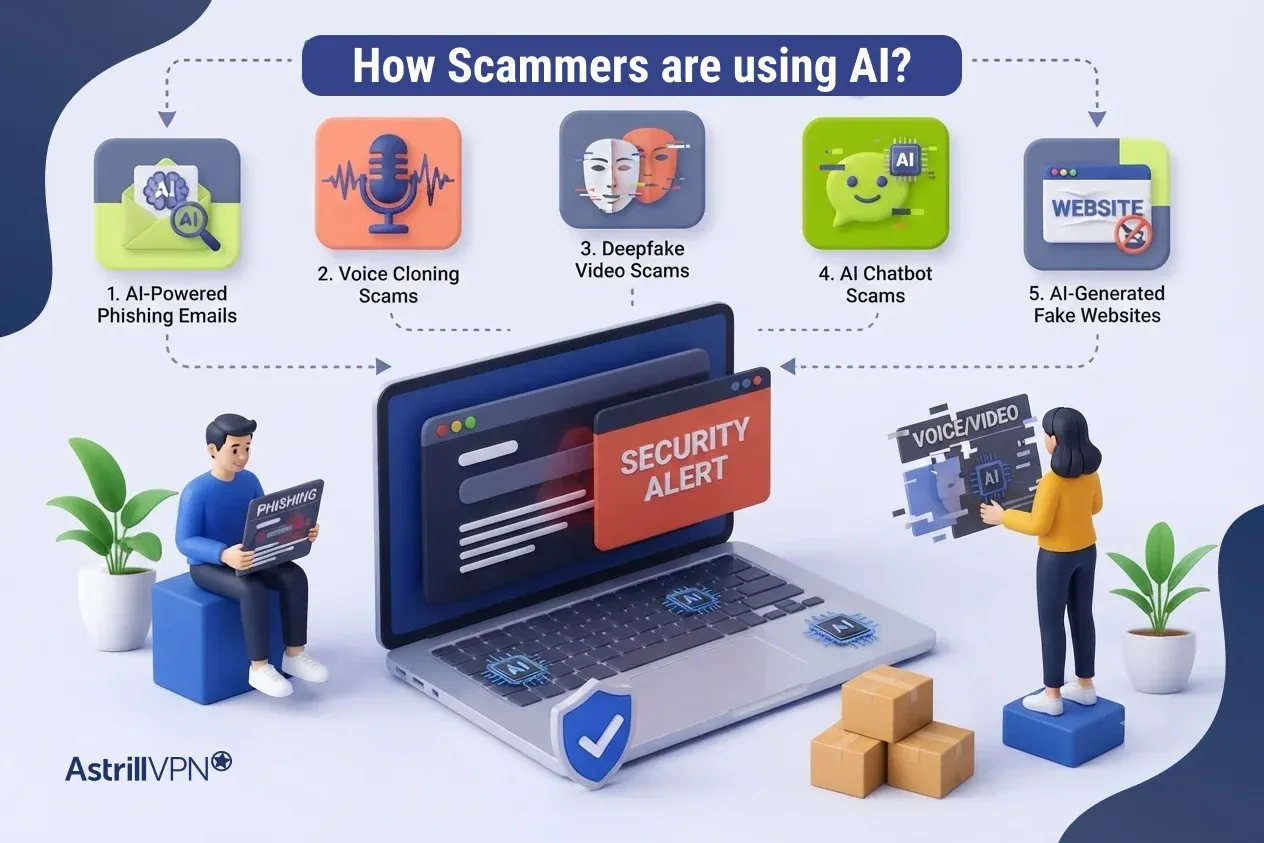
AI Chatbot Scams
AI-powered chatbots have become increasingly sophisticated and can convincingly imitate human conversations. Scammers use these chatbots to engage victims over extended periods, gradually building trust before requesting money or personal information.
Common chatbot scams include:
Fake Customer Support
Victims searching online for technical support may encounter fraudulent AI chatbots posing as representatives of well-known companies. The chatbot may instruct users to install remote access software, reveal passwords, or pay fake service fees.
Romance Scams
AI chatbots can maintain emotionally engaging conversations for weeks or months, convincing victims they are communicating with a genuine romantic partner. Eventually, scammers request financial assistance, investment opportunities, or gift cards under the pretense of needing them.
Cryptocurrency Assistance
Fraudsters deploy AI chatbots that impersonate cryptocurrency investment advisors or customer support representatives, persuading users to transfer digital assets to fraudulent wallets.
AI-Generated Fake Websites
Artificial intelligence allows criminals to build convincing fake websites much faster than ever before. These websites closely resemble legitimate organizations and often include professional layouts, accurate logos, AI-generated product descriptions, and realistic customer reviews. Victims may unknowingly enter usernames, passwords, banking details, or payment information into these fraudulent websites.
Common examples include:
- Fake online banking portals
- Counterfeit e-commerce stores
- Cryptocurrency exchanges
- Government service websites
- Subscription renewal pages
- Cloud storage login portals
Some AI-generated websites even integrate chatbot assistants that answer questions in real time, making the fraudulent site appear even more authentic. Because these fake websites can closely mimic trusted brands, users should always verify website URLs, ensure HTTPS encryption is present, and avoid clicking links from unsolicited emails or text messages.
Most Common Types of AI Fraud
AI has expanded the range of scams that cybercriminals can carry out. By automating research, creating convincing content, and impersonating real people, scammers can target individuals and organizations more effectively than ever before. Understanding the most common forms of AI fraud can help you recognize suspicious activity before it leads to financial or identity theft.
Financial Fraud
Financial fraud remains one of the most profitable uses of artificial intelligence for cybercriminals. AI enables attackers to create personalized scams that trick victims into transferring money or revealing banking credentials.
One common tactic involves AI-generated emails or phone calls impersonating banks, payment platforms, or financial advisors. Victims may receive notifications about suspicious transactions, account verification requests, or investment opportunities that appear genuine. The messages often include official logos, accurate formatting, and convincing language, making them difficult to distinguish from legitimate communications.
Businesses are also frequent targets. AI-powered business email compromise (BEC) attacks impersonate executives or vendors to request urgent wire transfers or invoice payments. These attacks can result in substantial financial losses if employees fail to verify payment requests through independent channels.
Identity Theft
Artificial intelligence has made identity theft faster and more sophisticated. Instead of stealing only existing identities, criminals can now create entirely synthetic identities by combining real and fabricated information.
AI helps fraudsters generate convincing identification documents, fake profile photos, forged utility bills, and realistic signatures. These synthetic identities may be used to open bank accounts, apply for loans, create fraudulent businesses, or bypass identity verification processes.
Stolen personal information is often gathered from previous data breaches, social media profiles, and public records. AI then organizes this information into believable identities that are difficult for automated verification systems to detect.
Employment Scams
The rise of remote work has created new opportunities for AI scammers targeting job seekers. Fraudsters create professional-looking job listings, fake company websites, and AI-generated recruiter profiles to attract applicants. Once a victim applies, scammers conduct realistic interviews using AI chatbots or deepfake technology before requesting personal information, banking details, or upfront payments for equipment or training.
Some scams involve sending fake employment contracts or requesting identity documents under the pretense of completing background checks. These stolen documents can later be used for identity theft or financial fraud.
Cryptocurrency Scams
Cryptocurrency continues to attract cybercriminals due to the speed and anonymity of digital transactions. AI-generated investment advice, fake trading platforms, and deepfake videos featuring celebrities or financial experts are commonly used to convince victims to invest in fraudulent crypto schemes. Once funds are transferred, recovering them is often impossible.
Scammers also deploy AI chatbots that claim to offer investment guidance or technical support for cryptocurrency exchanges. These bots may persuade users to reveal wallet recovery phrases or transfer assets to fraudulent wallets.
Healthcare Scams
Healthcare organizations store large amounts of sensitive personal and financial information, making them attractive targets for AI fraud. Cybercriminals impersonate hospitals, insurance providers, or pharmacies to request medical records, insurance details, or payment information. AI-generated emails and phone calls often reference actual appointments or insurance claims to appear legitimate.
Patients may also encounter fraudulent telehealth platforms or fake prescription services that collect personal information without delivering any legitimate healthcare services.
Warning Signs of AI Scammers
Although AI-powered scams are becoming increasingly convincing, they often share common warning signs. Learning to recognize these indicators can help prevent financial loss and identity theft.
Messages That Create Panic
Scammers frequently rely on fear and urgency to pressure victims into making quick decisions. You may receive messages claiming that your bank account has been compromised, a family member has been injured, or your online account will be permanently suspended unless immediate action is taken. These emotional tactics are designed to bypass rational thinking and encourage impulsive responses.
Whenever you receive an urgent request involving money or sensitive information, pause and verify the situation through an independent communication channel before taking any action.
Requests for Immediate Payment
Legitimate organizations rarely demand immediate payment through unconventional methods. AI scammers often insist on urgent transfers using cryptocurrency, gift cards, wire transfers, or digital payment apps because these transactions are difficult to reverse. Be especially cautious if someone pressures you to keep the payment confidential or discourages you from consulting family members or colleagues.
Deepfake Videos or Voice Calls
Voice cloning and deepfake technology have made impersonation attacks significantly more convincing. Even if a caller sounds exactly like a family member, employer, or executive, verify the request before acting.
If you receive an unexpected phone call requesting money or confidential information, hang up and contact the individual using a trusted phone number you already have. Similarly, question unexpected video messages involving financial requests, investment opportunities, or confidential business instructions.
Generative AI Fraud: Why It’s Different?
Generative AI has fundamentally changed how cybercriminals operate. Unlike traditional scams that relied heavily on manual effort, generative AI allows attackers to automate nearly every stage of fraud while increasing the realism of their attacks.
Mass Personalization
Traditional phishing campaigns often send identical emails to thousands of recipients. Generative AI can create unique messages tailored to each individual by analyzing publicly available information, including social media profiles, company websites, and professional networking platforms. This personalization significantly increases the likelihood that victims will trust the communication.
Faster Scam Creation
AI dramatically reduces the time required to develop phishing campaigns, fake websites, malicious advertisements, and fraudulent documents. What once required hours of manual writing and design can now be completed within minutes, allowing cybercriminals to launch attacks at unprecedented speed.
Realistic Conversations
Modern AI language models can maintain natural, context-aware conversations over extended periods. This capability enables scammers to build trust gradually instead of relying on immediate deception. Whether posing as customer support representatives, recruiters, or romantic partners, AI chatbots can respond intelligently to questions, making fraudulent interactions appear authentic.
Continuous Improvement
Many AI systems learn from previous interactions, enabling cybercriminals to refine their scams over time. Attackers can analyze which messages receive responses, which payment requests succeed, and which social engineering tactics generate the highest conversion rates. As AI technology continues to evolve, these scams are expected to become even more convincing and targeted.
How to Protect Yourself from AI Scams?
Artificial intelligence has made scams more convincing, but the fundamental principles of cybersecurity remain effective. By combining good online habits with trusted security tools, you can significantly reduce your risk of becoming a victim of AI fraud.
Verify Before You Trust
One of the most effective ways to stop an AI scam is to verify unexpected requests before taking action. Whether you receive an email, phone call, text message, or video message asking for money, sensitive information, or urgent assistance, always confirm its authenticity through a separate communication channel.
For example, if someone claiming to be your bank contacts you about suspicious activity, avoid using the phone number or link provided in the message. Instead, call the bank using the official number listed on its website or the back of your bank card. Similarly, if a family member appears to request emergency financial assistance, contact them directly using a trusted phone number before sending money.
Enable Multi-Factor Authentication (MFA)
Passwords alone are no longer enough to protect online accounts. AI-powered phishing attacks can trick users into revealing login credentials, making multi-factor authentication an essential layer of security.
MFA requires an additional verification step, such as a one-time code, biometric authentication, or a security key, before access is granted. Even if attackers obtain your password, they are unlikely to gain access without the second authentication factor.
Enable MFA on:
- Email accounts
- Online banking
- Social media platforms
- Cloud storage services
- Business applications
- Cryptocurrency wallets
Keep Software and Devices Updated
Cybercriminals often exploit known software vulnerabilities to install malware or steal information. Regularly updating your operating system, web browser, antivirus software, and mobile applications helps close these security gaps. Whenever possible, enable automatic updates to ensure your devices receive the latest security patches without delay.
Be Careful with Links and Attachments
AI-generated phishing messages often contain malicious links or infected attachments disguised as invoices, account notifications, or shipping confirmations. If you are unsure whether a message is genuine, visit the organization’s website manually rather than clicking the provided link.
Before clicking any link:
- Check the sender’s email address carefully.
- Hover over links to preview the destination URL.
- Look for unusual domain names or misspellings.
- Avoid downloading unexpected attachments.
Protect Your Personal Information
The more information scammers collect about you, the easier it becomes for AI to generate personalized attacks. Limit the amount of personal information you share publicly, including:
- Birthdates
- Phone numbers
- Home addresses
- Travel plans
- Employer details
- Family relationships
Review your social media privacy settings regularly to control who can access your personal information.
Learn to Recognize Deepfakes
Deepfake technology continues to improve, making fake videos and audio increasingly difficult to detect. If a video contains surprising financial requests or urgent instructions, verify the message independently before responding.
Watch for warning signs such as:
- Unnatural facial movements
- Inconsistent lighting
- Delayed lip synchronization
- Robotic speech patterns
- Unusual blinking
- Requests that seem out of character
Use Strong, Unique Passwords
Reusing passwords across multiple websites increases the risk of account compromise if one service experiences a data breach. Create long, unique passwords for every account and store them securely using a reputable password manager. Password managers can also alert you if your credentials have been exposed in known data breaches.
Monitor Financial Accounts Regularly
Review bank statements, credit card transactions, and online account activity frequently for unauthorized charges or unusual behavior. The sooner fraudulent activity is detected, the greater the likelihood of minimizing financial damage and recovering compromised accounts.
How can AstrillVPN help protect me from AI Scams?
A Virtual Private Network (VPN) is not a solution for detecting AI-generated scams, but it plays an important role in strengthening your overall cybersecurity. By encrypting your internet connection and protecting your online activity, AstrillVPN reduces certain risks that cybercriminals may exploit during AI-powered attacks.
Encrypts Your Internet Connection
When you connect to the internet through a VPN, your data is encrypted before it leaves your device. This encryption makes it much more difficult for hackers to intercept sensitive information while you browse, especially on public Wi-Fi networks found in airports, hotels, cafés, and shopping centers.
If an AI scam attempts to lure you into logging into a legitimate service while you’re using an unsecured network, AstrillVPN helps protect your data from network-based interception.
Protects You on Public Wi-Fi
Public wireless networks are convenient but often lack strong security controls. Cybercriminals may create fake Wi-Fi hotspots or monitor unsecured connections to steal login credentials and financial information.
AstrillVPN secures your connection by encrypting the data transmitted between your device and the VPN server, making it significantly harder for attackers on the same network to spy on your online activity.
Reduces Online Tracking
Many AI scams begin with information gathered from publicly available online activity. Advertisers, data brokers, and malicious actors can collect browsing habits to build detailed user profiles. AstrillVPN masks your IP address and helps reduce certain forms of online tracking, making it more difficult for third parties to associate your browsing activity with your identity.
Adds Privacy During Online Banking
When accessing banking or financial services, especially while traveling or using unfamiliar networks, AstrillVPN provides an additional layer of protection by encrypting sensitive communications. While a VPN cannot prevent phishing if you voluntarily enter your credentials on a fake website, it helps protect legitimate banking sessions against network-based threats.
Supports Remote Workers
Employees working remotely frequently access company resources from various locations. AstrillVPN creates an encrypted tunnel between the employee’s device and the organization’s network, helping protect confidential business information from interception. This is particularly valuable for organizations that handle financial records, customer data, or intellectual property.
Best Practices to Stay Safe from AI Fraud
Protecting yourself from AI scams requires a proactive approach. The following best practices can significantly reduce your exposure to AI-powered cyber threats.
Stay Informed About Emerging Scams
Cybercriminals continuously adapt their techniques as AI technology evolves. Follow trusted cybersecurity news sources and stay updated on the latest phishing campaigns, deepfake scams, and identity theft tactics. Awareness is one of the most effective defenses against new forms of fraud.
Verify Identities Through Multiple Channels
Never rely solely on an email, phone call, text message, or video when making important financial or business decisions. If someone requests confidential information or urgent payments, confirm their identity through a separate communication method before responding.
Never Share One-Time Passwords
Banks, government agencies, and legitimate businesses will not ask you to disclose one-time verification codes or multi-factor authentication tokens. If someone requests these codes, it is almost certainly a scam.
Question Unexpected Requests
Treat unexpected messages involving money, passwords, confidential documents, or account verification with caution. Even if the communication appears to come from a trusted source, verify it independently before taking action.
Train Employees on AI Threats
Organizations should educate employees about AI-powered phishing, deepfake impersonation, and business email compromise attacks. Regular cybersecurity awareness training and phishing simulations can help staff recognize suspicious communications before they lead to financial losses.
Use Layered Security
No single security tool can stop every cyber threat. A layered security strategy provides the strongest protection against AI fraud. Together, these measures create multiple barriers that make it more difficult for attackers to succeed.
Consider combining:
- Antivirus software
- VPN services
- Password managers
- Multi-factor authentication
- Email filtering
- Secure web gateways
- Regular software updates
- Employee security training
Conclusion
Artificial intelligence is transforming the digital world, but it has also become a powerful tool for cybercriminals. AI-generated phishing emails, voice cloning, deepfake videos, fake websites, and intelligent chatbots enable scammers to create attacks that are more convincing than ever before.
The rise of generative AI fraud means that both individuals and organizations must rethink how they verify information and protect sensitive data. Relying on appearances alone is no longer enough when AI can mimic trusted voices, realistic videos, and professional communications with remarkable accuracy.
Frequently Asked Questions
Here are some of the most frequently asked questions.
AI-powered scams are among the fastest-growing forms of cybercrime because artificial intelligence enables attackers to automate phishing campaigns, create convincing deepfakes, and personalize scams at scale. While traditional cybercrime remains widespread, AI significantly increases the speed, reach, and effectiveness of fraudulent activities.
Antivirus software is effective at detecting malware, ransomware, and many malicious websites, but it cannot reliably identify AI-generated emails, voice cloning, or deepfake videos. Protecting yourself from AI scams requires a combination of antivirus software, user awareness, multi-factor authentication, and careful verification of unexpected communications.
Traditional scams often relied on generic messages with obvious warning signs, such as poor grammar or suspicious formatting. AI-powered scams use artificial intelligence to generate realistic emails, clone voices, create deepfake videos, and personalize attacks using publicly available information. As a result, AI scams are typically more convincing and harder to detect.
Financial services, healthcare, government agencies, retail, e-commerce, education, and cryptocurrency platforms are among the most frequently targeted industries. These sectors manage valuable financial transactions, personal data, or sensitive business information that cybercriminals seek to exploit.
Generative AI allows criminals to produce grammatically correct, professional-looking emails tailored to specific recipients. By analyzing publicly available information such as social media profiles, company websites, and professional networking accounts, AI can create messages that reference real employers, colleagues, recent events, or personal interests, making phishing attempts appear far more authentic.
AI can eliminate many of the traditional warning signs associated with phishing, including spelling mistakes and awkward language. It also enables personalized messaging, realistic branding, multilingual communication, and context-aware content. These improvements make AI-generated phishing emails resemble legitimate business communications, requiring users to rely on verification practices rather than visual cues alone.

Secure your privacy instantly. Try AstrillVPN with zero risk.
About The Author










No comments were posted yet